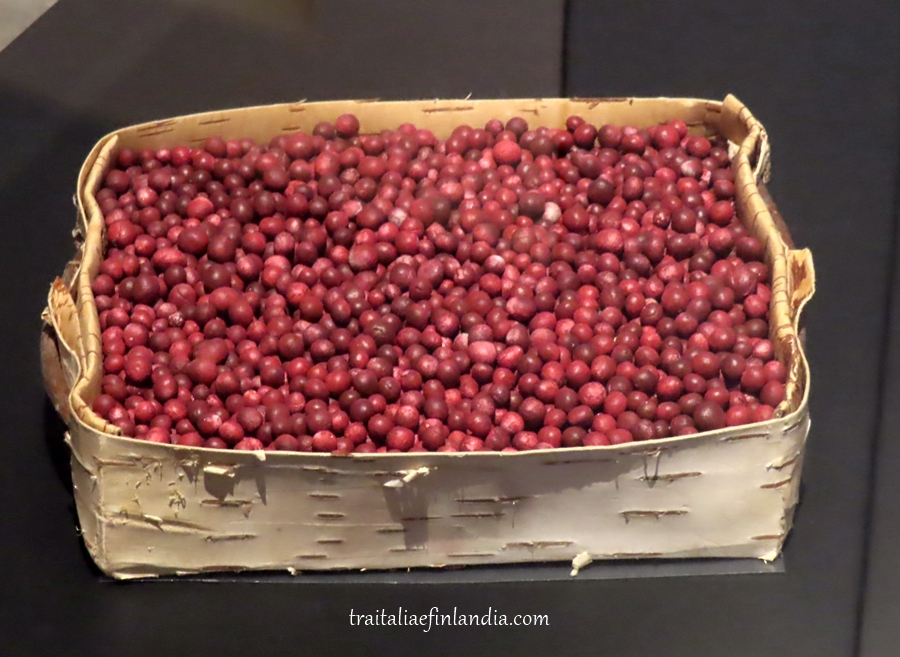
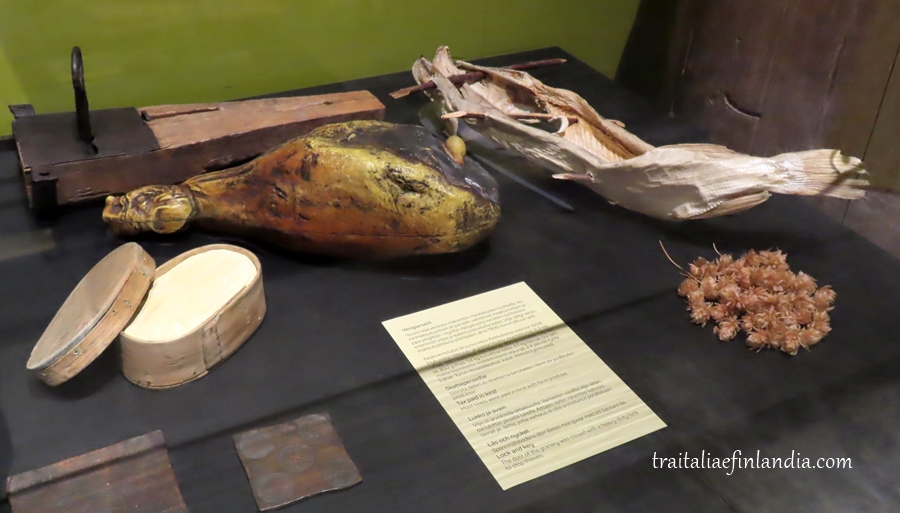
Continuiamo oggi la nostra visita al museo dell’agricoltura a Loimaa. Oggi parliamo di cibo e di cucina. Vi propongo alcune curiosita’ storiche: quelli sopra sono mirtilli rossi, raccolti dal sottobosco e conservati in scatole fatte con strisce di corteccia di betulla. Nella foto seguente: tipi di cibo importanti per i finlandesi: pesce essiccato o affumicato, prosciutto di maiale, burro, luppolo.

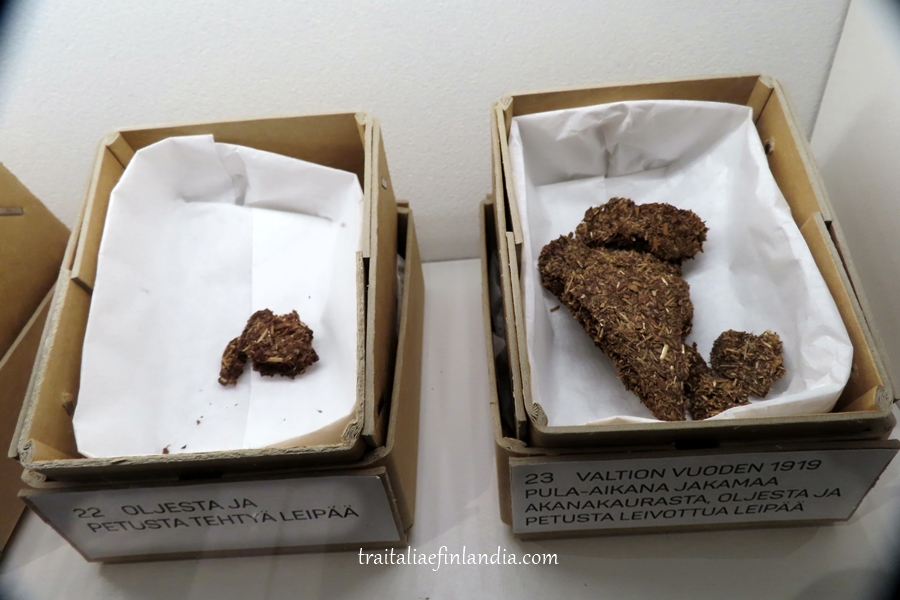
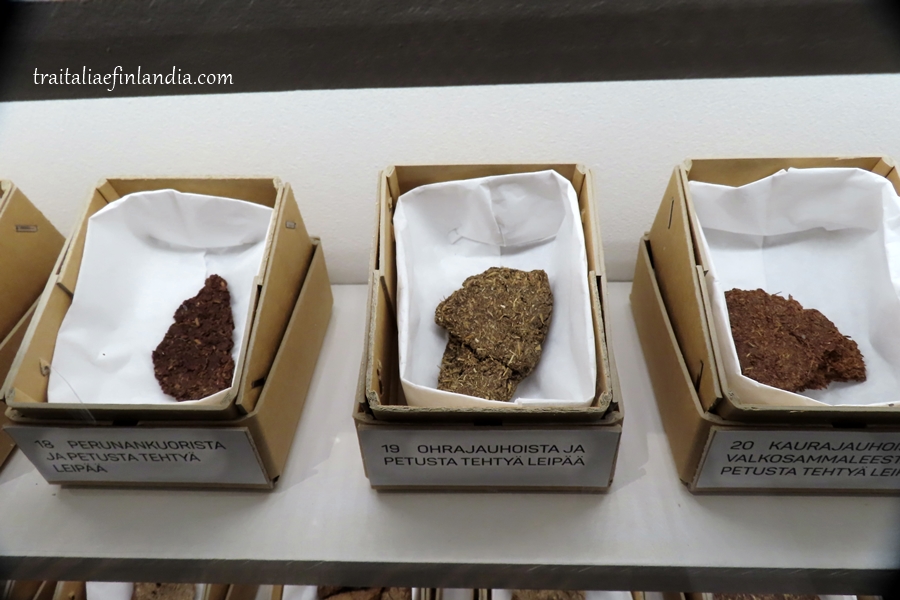
In queste foto invece, delle specie di “pane” fatto inglobando nella poca farina anche la polpa degli alberi: soprattutto pini e betulle. Cosi’ mangiavano i finlandesi nei periodi di carestia. Ovviamente la polpa degli alberi non e’ nutriente, serviva solo a levare la fame.

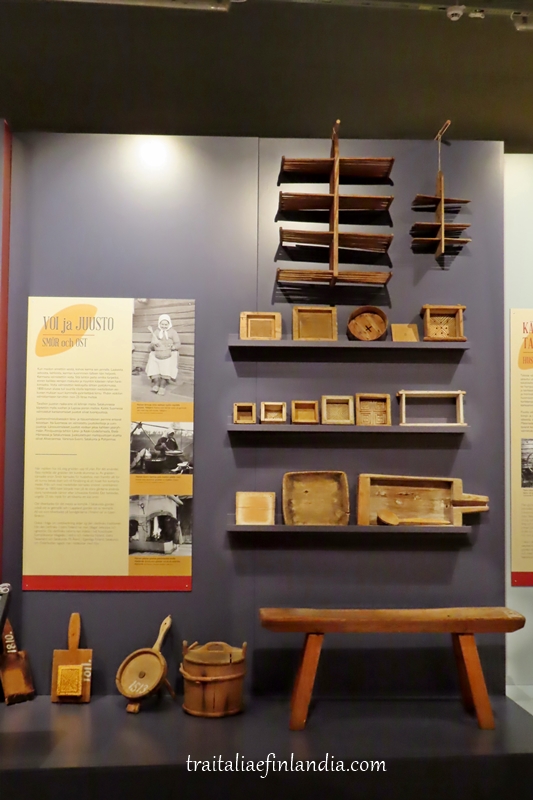
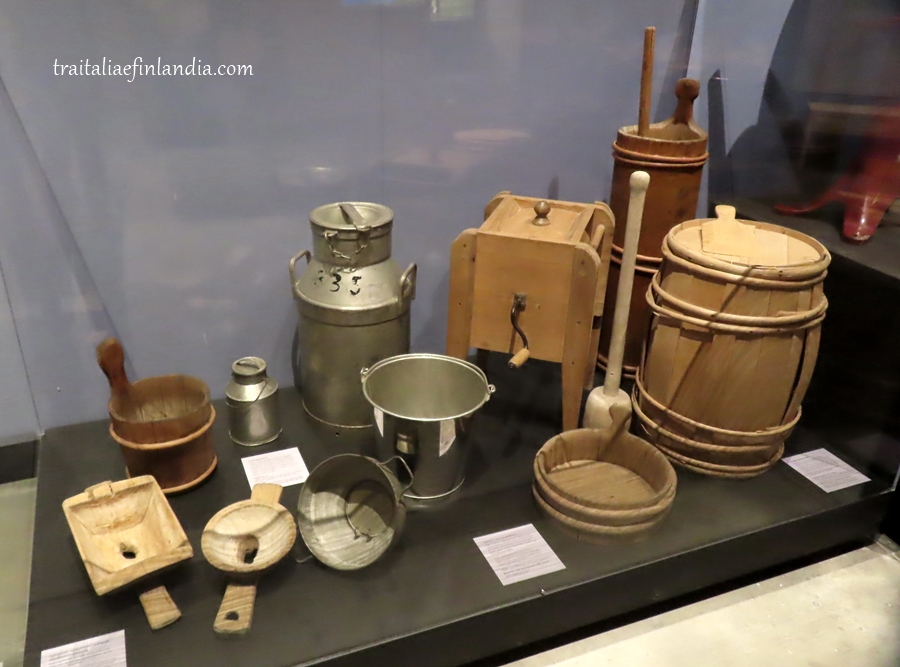
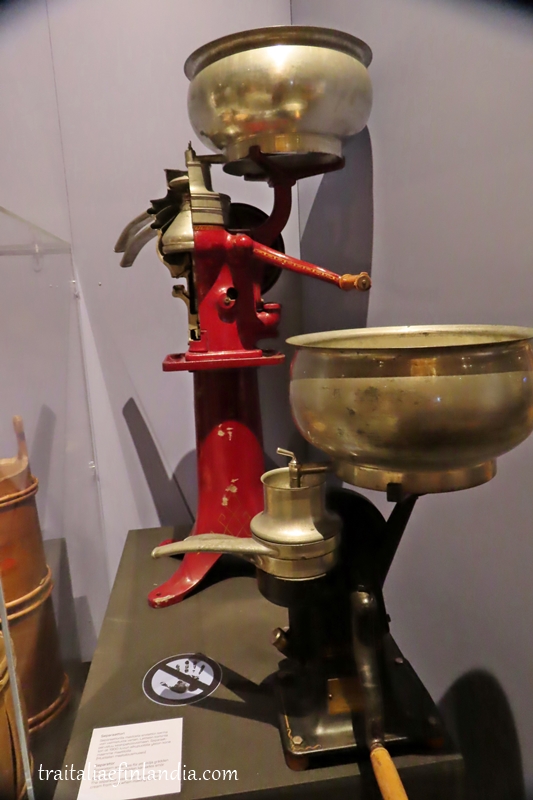
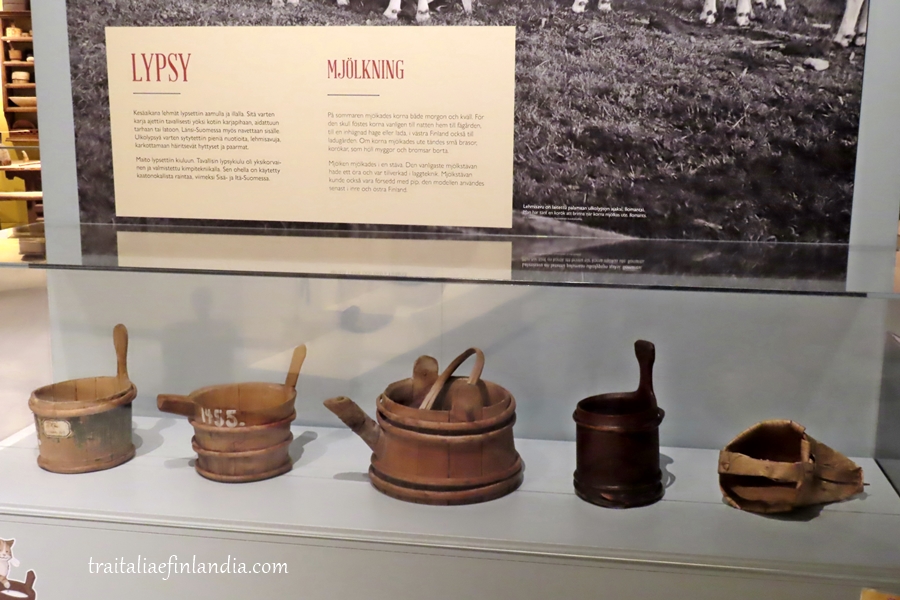
Questi attrezzi si usavano per la conservazione del latte e la produzione di burro e formaggi.
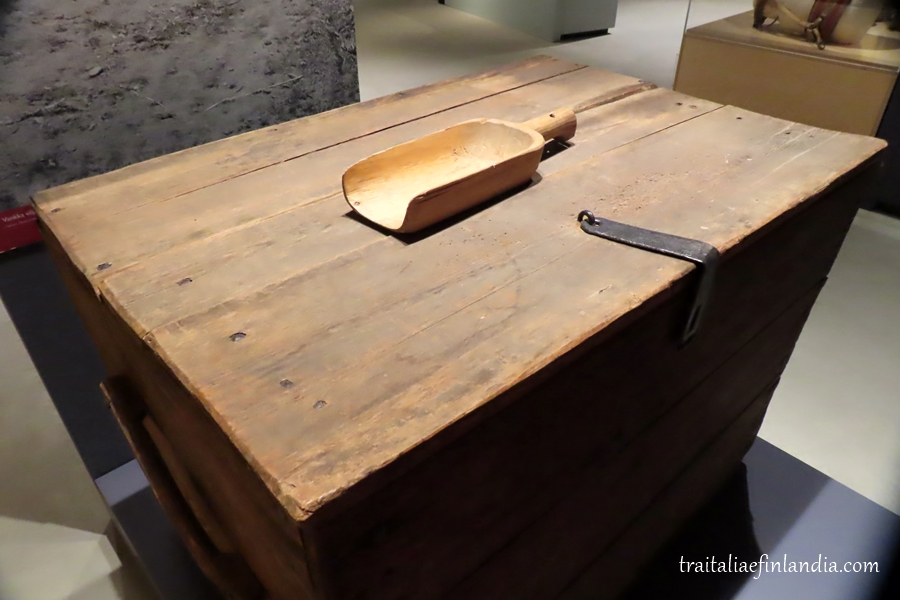

Altri utensili usati per riporre o comunque trattare il cibo – alcuni fatti ancora con strisce di corteccia di betulla.
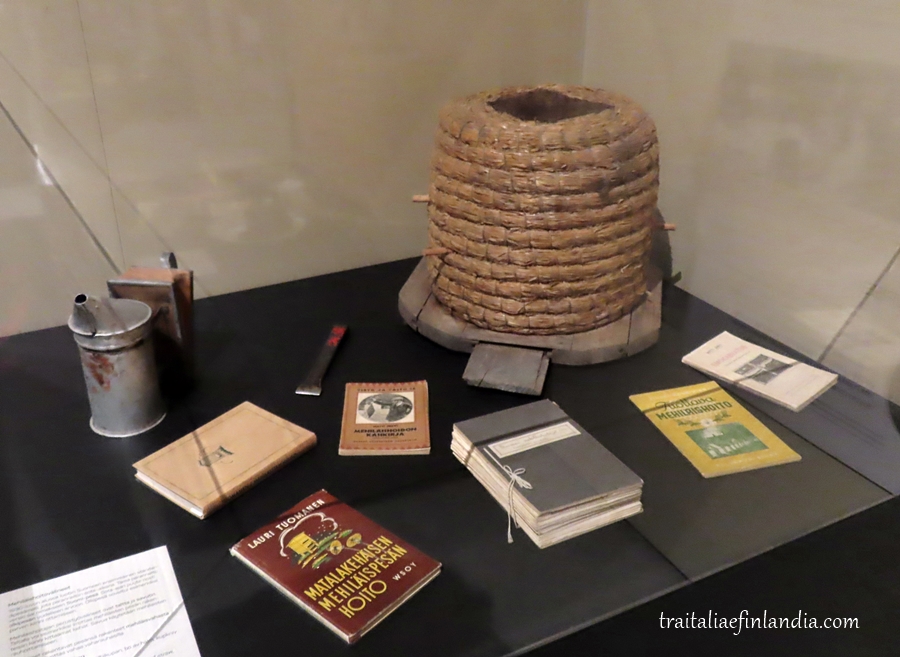
A partire dal 1700 anche l’apicoltura ha iniziato una lenta diffusione. Solo all’inizio del 1900 pero’ questa attivita’ divenne popolare su larga scala.


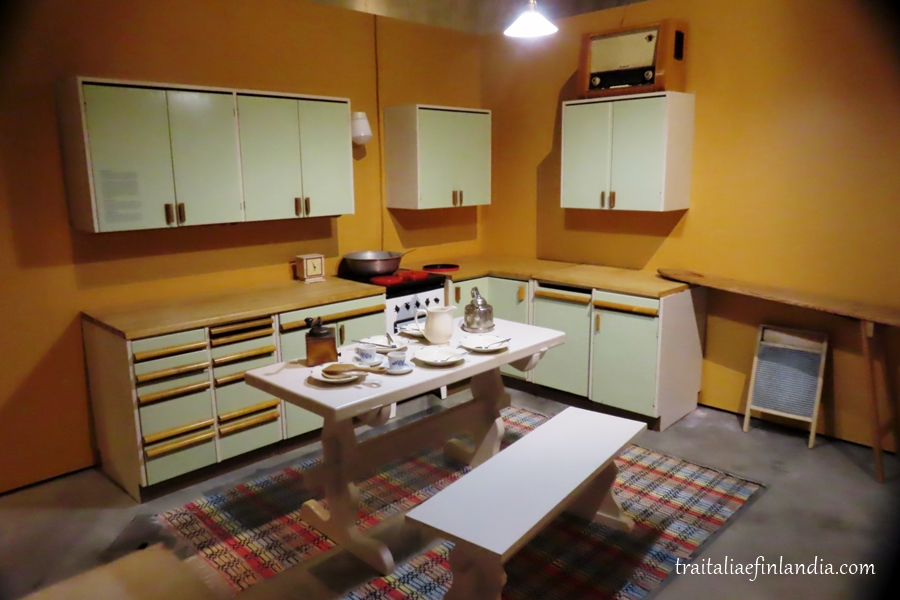
Infine un bel canterano decorato e due cucine: una settecentesca, con gli utensili in legno e una del secolo scorso. La tavola non e’ attorniata da sedie, ma vi sono due panche: e’ questo lo stile tradizionale, si chiama: Pirttinpöytä. Naturalmente il fornello e’ elettrico.
At the Sarka Museum #2.
Today we will continue our visit to the agricultural museum in Loimaa. Today we talk about food and cooking. I will tell you about some historical facts: the ones above are cranberries, collected from the undergrowth and stored in boxes made of birch bark strips. In the following photo: types of food important to the Finns: dried or smoked fish, pork ham, butter, hops.
In the following photos instead, a kind of “bread” made by incorporating the pulp of trees into the little flour at disposal: especially pines and birches. This is how the Finns ate during times of famine. Obviously the pulp of trees is not nutritious, it only helped to quench hunger.
These tools were used for the preservation of milk and the production of butter and cheese.
Other utensils used for storing or otherwise handling food – some still made from strips of birch bark.
From 1700 onwards, beekeeping also began to slowly spread. However, it was only at the beginning of the 1900s that this activity became popular on a large scale.
Finally a beautiful decorated chest of drawers and two kitchens: one from the eighteenth century, with wooden utensils and one from the last century. The table is not surrounded by chairs, but there are two benches: this is the traditional style, it is called: Pirttinpöytä. Of course the stove is electric.
****


Il fatto della polpa degli alberi nel pane mi ha fatto pensare ai vari modi di economizzare sul cibo usati ancora dalle nostre nonne, memori dei periodi di carestia del tempo che fu.
"Mi piace""Mi piace"
I showed it on my Blog.
"Mi piace"Piace a 1 persona
Looks like a wonderful museum to explore, great exhibits.
Take care, happy Friday! Have a great weekend.
"Mi piace"Piace a 1 persona
A fascinating presentation of details from life of ordinary people of yesteryear.
"Mi piace"Piace a 1 persona
Assolutamente. Penso che in diverse zone del mondo si siano arrangiati come potevano con quel che trovavano, in tempi di carestia.
Grazie di essere passata. 🙂
"Mi piace"Piace a 1 persona
Thank you for appreciating. 😊
"Mi piace""Mi piace"
Thank you Eileen. Have a nice weekend too!
"Mi piace"Piace a 1 persona
Thanks. So kind of you!
"Mi piace"Piace a 1 persona
…Luisella, this museum is great. How things have changed.
"Mi piace"Piace a 1 persona
Yes, even though we still remember something…
"Mi piace""Mi piace"
Anche la seconda parte di questo museo è davvero interessante, 👍.
In formato nettamente più piccolo, tanto che è più un souvenir che un oggetto vero e proprio, ho una zangola nella mia cucina, 🙂.
"Mi piace"Piace a 1 persona
Che spettacolo! 👏
"Mi piace"Piace a 1 persona
Molto interessante questo Museo, ottimo articolo 👍👍👍👏👏👏🤗😉😊
"Mi piace""Mi piace"
Amazing!
"Mi piace"Piace a 1 persona
Thank you very much.
"Mi piace""Mi piace"
a lot to be seen there.
"Mi piace"Piace a 2 people
That’s actually true. Thank you William.
"Mi piace""Mi piace"