Kuhmo e’ una cittadina di circa 14.000 abitanti della Finlandia centro-orientale. Il confine con la Russia e’ molto vicino e a nord di Kuhmo c’e’ una stazione di frontiera. Questa zona, (la regione di Kuhmo si chiama Kainuu), e’ molto selvaggia: boschi e paludi si alternano ed anche oltre confine e’ lo stesso.
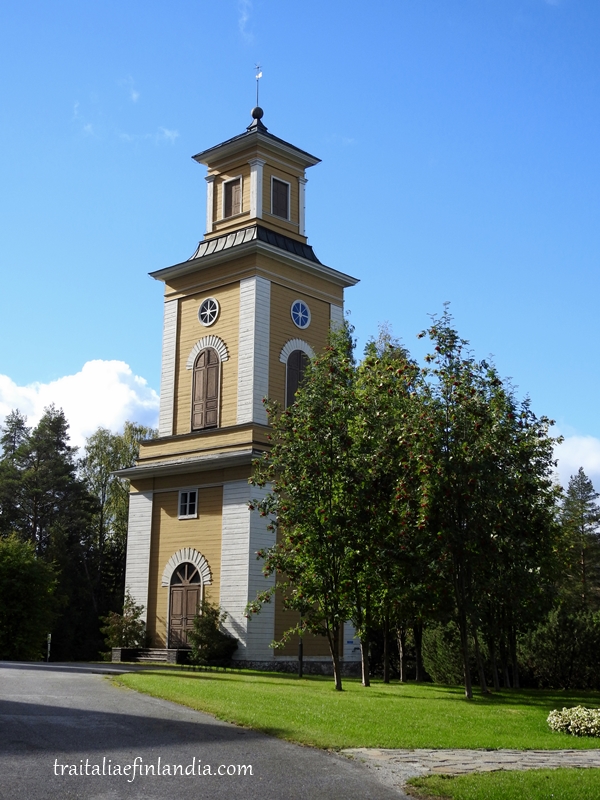
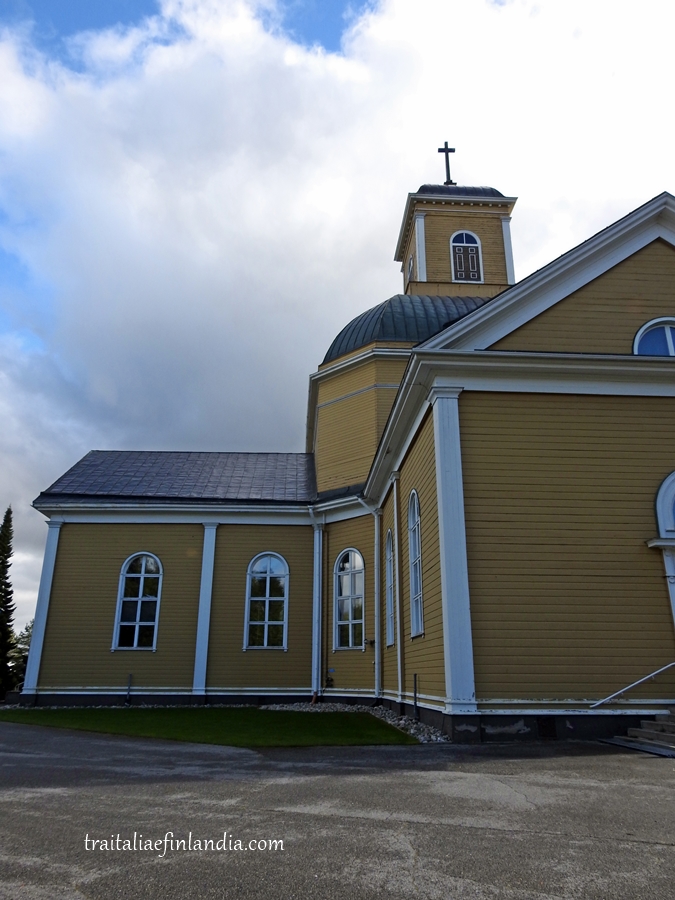
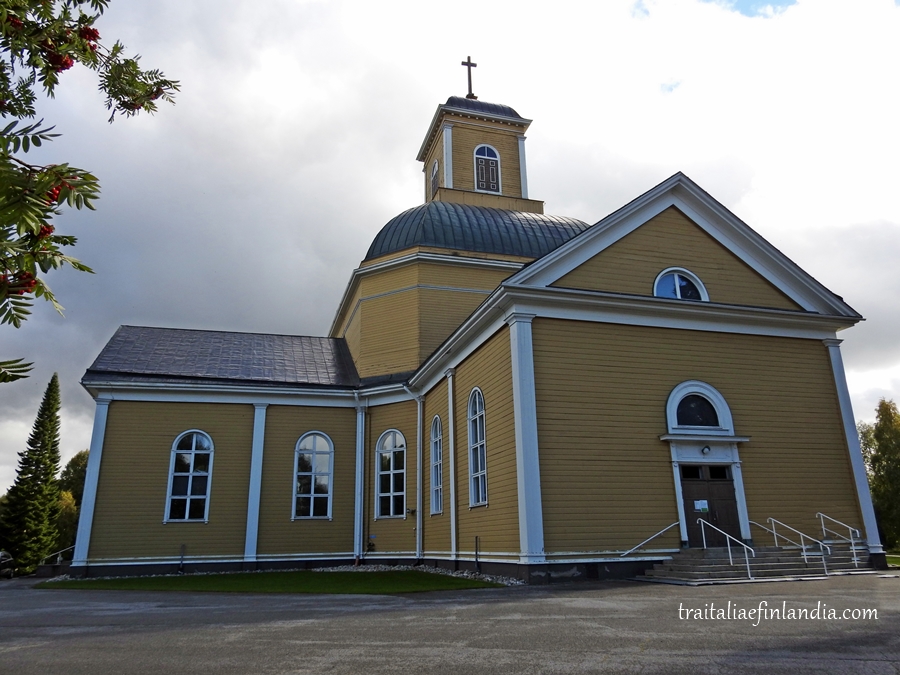
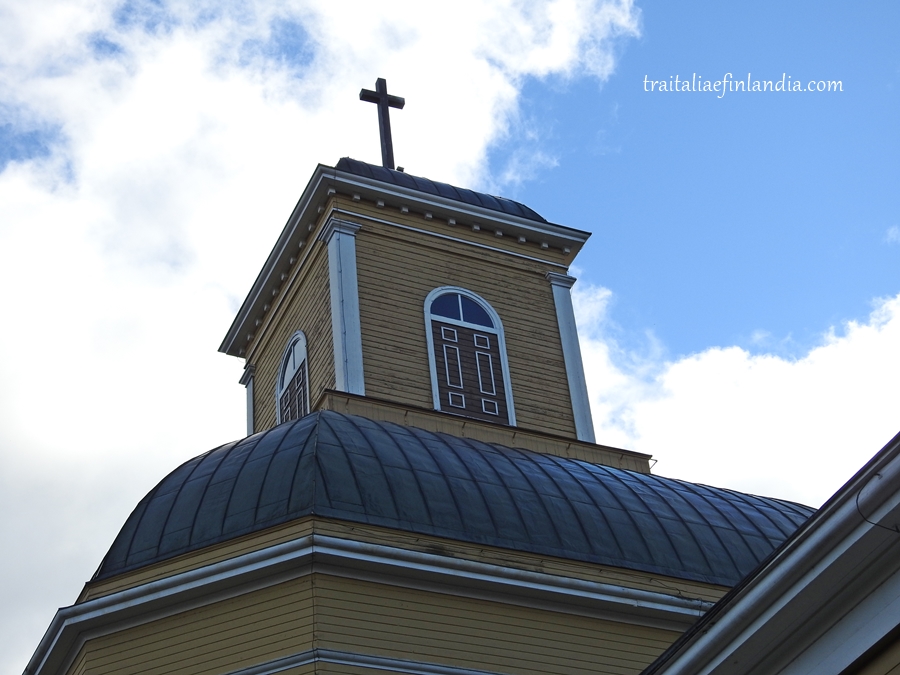
La nostra passeggiata inizia dando uno sguardo alla chiesa lignea, in pieno centro. Edificata nel primo ‘800, la chiesa dovette essere restaurata completamente dopo la Guerra d’inverno, l’invasione russa del 1939, poiche’ i bombardamenti la resero inservibile. Purtroppo l’abbiamo trovata chiusa, ma il suo stile Neoclassico lo ritroviamo in molte chiese finlandesi.
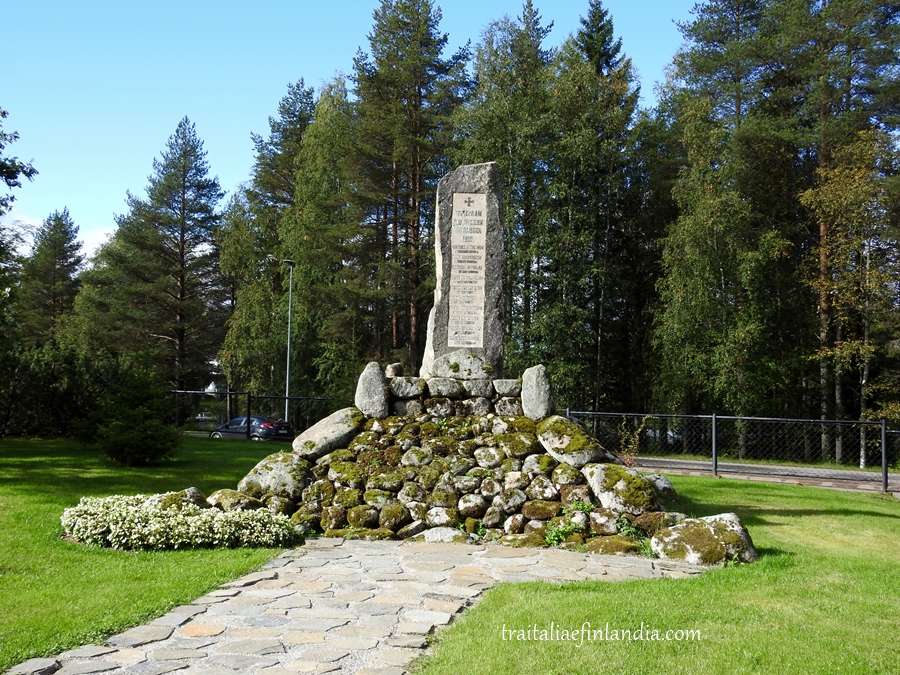
Fuori la chiesa si trova il cimitero, come sempre nelle cittadine finlandesi, con l’immancabile monumento ai caduti. Questo riguarda i caduti della Grande Guerra.
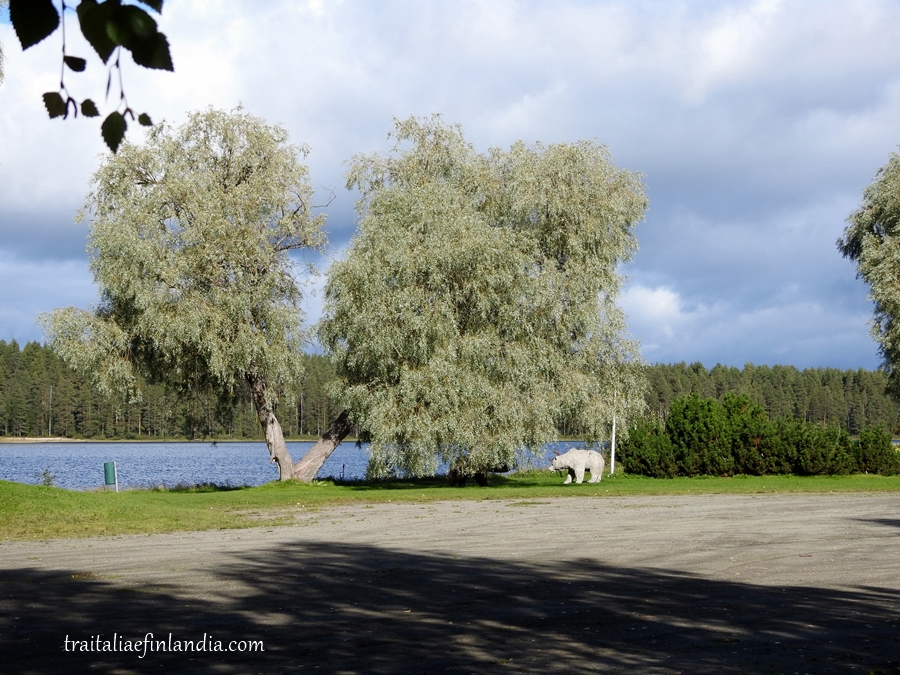
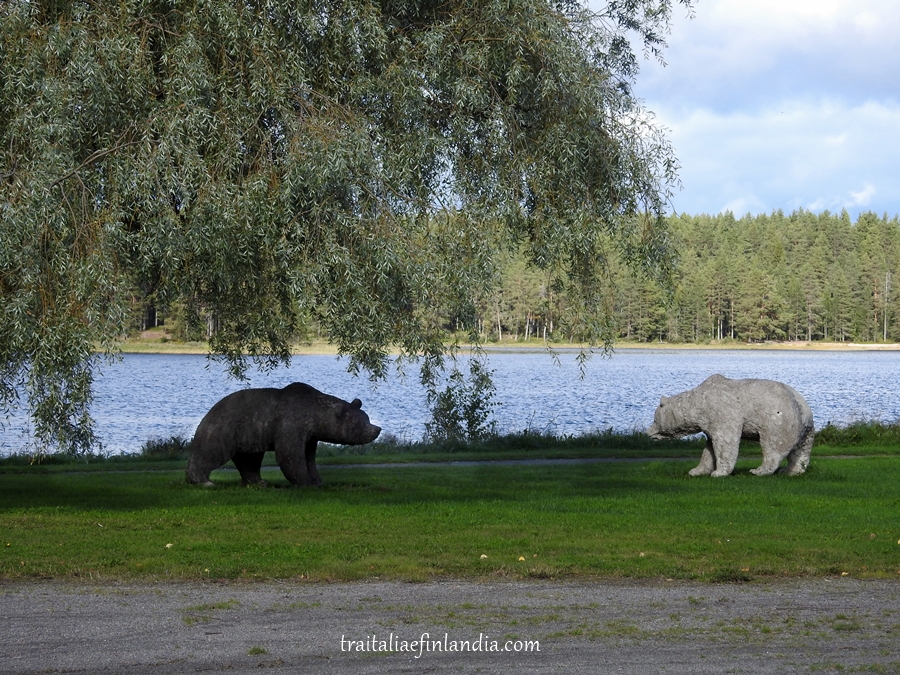
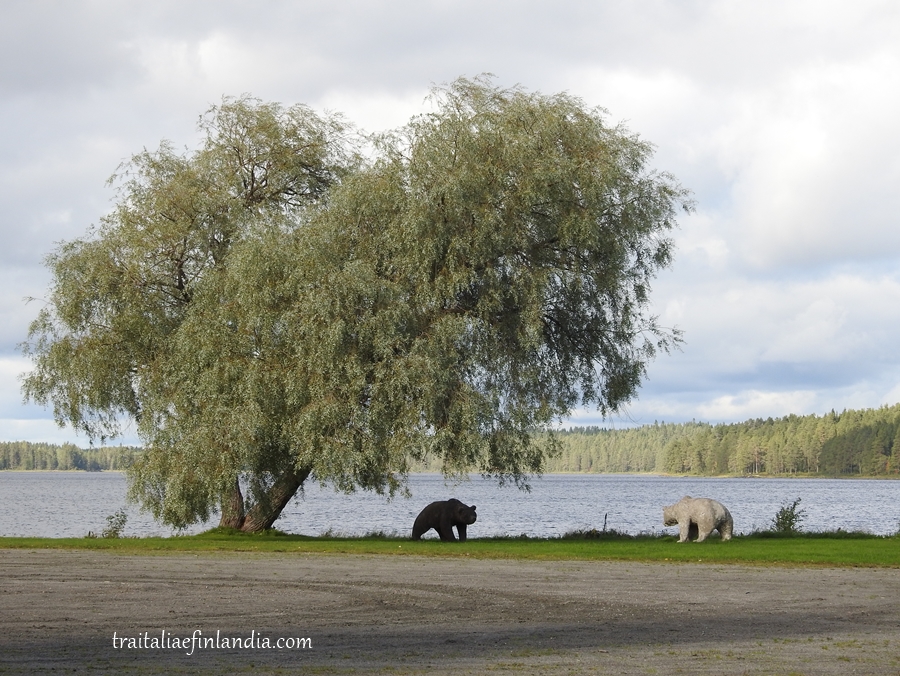
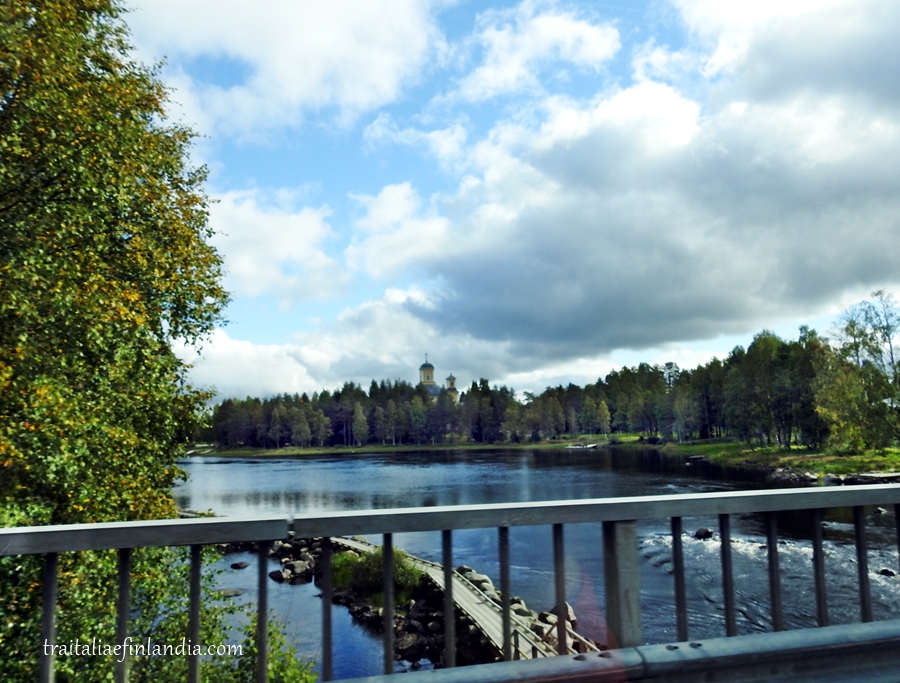
Kuhmo si trova in una regione molto selvaggia, come detto, dove e’ possibile vedere la fauna selvatica. In particolare l’orso, che e’ il simbolo della citta’ e al quale sono dedicate le sculture che abbelliscono il parco cittadino, lungo il fiume Pajakkajoki. Per l’osservazione degli orsi e delle altre forme di vita selvatica sono presenti in zona capanni attrezzati, nei quali rintanarsi con la propria attrezzatura ed attendere il passaggio degli animali.
Kuhmo e’ anche una cittadina attiva: ogni anno vi si tiene un festival di musica da camera, ad esempio. Ve ne ho parlato qui: https://traitaliaefinlandia.com/2020/12/09/da-mantova-a-kuhmo/
In the Park of Kuhmo.
Kuhmo is a town of about 14,000 inhabitants in central-eastern Finland. The border with Russia is very close, and there is a border station north of Kuhmo. This area (the Kuhmo region is called Kainuu) is very wild: woodlands and swamps alternate and the same is true across the border.
Our walk begins with a look at the wooden church, right in the town center. Built in the early 19th century, the church had to be completely restored after the Winter War – the Russian invasion in 1939 – as bombings made it unusable. Unfortunately, we found it closed, but its Neoclassical style is found in many Finnish churches.
Outside the church is the cemetery, as is always the case in Finnish towns, with the inevitable war memorial. This one is for the fallen of WW1.
Kuhmo is located in a very wild region, as mentioned, where it is possible to see wildlife. In particular the Brown bear, which is the symbol of the city and to which the sculptures that adorn the city park along the Pajakkajoki River are dedicated. For observing Bears and other wildlife, there are equipped hides in the area, where you can hide with your gear and wait for the animals to pass by.
Kuhmo is also quite active town: every year, for example, a chamber music festival is held there. I told you about it here: https://traitaliaefinlandia.com/2020/12/09/da-mantova-a-kuhmo/
****
 Tra Italia e Finlandia
The town rich in history and nature. BTW did you see any bears there?
"Mi piace"Piace a 1 persona
Those bear sculptures are very realistic. From a distance they must look very convincing!
"Mi piace"Piace a 1 persona
Actually no. Just the sculptures. 😉 We did not stay long time.
"Mi piace""Mi piace"
Indeed they are. 😉
"Mi piace"Piace a 1 persona
Originale et très belle église 😊
"Mi piace"Piace a 1 persona
Tout à fait magnifiques tes photos, l’église est belle. Bonne journée
"Mi piace"Piace a 1 persona
Hello,
Beautiful photos of the church and the memorial, the bears are a favorite.
Take care, enjoy your day and have a wonderful week!
"Mi piace"Piace a 1 persona
…Luisella, I wish that you had a friendly neighbor!
"Mi piace"Piace a 1 persona
Mi piacciono queste foto di chiesa e paesaggi. Sono bellissime!
"Mi piace"Piace a 1 persona
This seems to be a nice little town – and as many others, the two bear sculptures are my favorites!
"Mi piace"Piace a 1 persona
Oh yes, it is really a nice town. Thank you Christa.
"Mi piace"Piace a 1 persona
Grazie mille Egidio.
"Mi piace""Mi piace"
Oh yes, Tom, thanks. My neighbour is an amiable lady.
"Mi piace""Mi piace"
Glad you liked my post, Eileen. Thanks. Have a great week ahead too!
"Mi piace"Piace a 1 persona
Merci. Très gentil, Georges. Bonne semaine!
"Mi piace""Mi piace"
Merci Sylvie. 😊
"Mi piace"Piace a 1 persona
Interesting to read about and your photos show it off nicely!
"Mi piace"Piace a 1 persona
Che foto meravigliose, proprio degli attimi magnifici, vederli dal vivo deve dare un’enorme emozione! 👍👍👍👍👍👌👌👌👌👏👏👏👏👏👏👏👏👏👏
"Mi piace"Piace a 1 persona
Grazie Max e buona giornata!
"Mi piace"Piace a 1 persona
Thank you very much.
"Mi piace"Piace a 1 persona