
Buongiorno lettori! Oggi un post dedicato a tutti gli italiani che si lamentano poiche’ la lingua italiana e’ invasa da anglicismi. Forse pero’ pur avendo viaggiato all’estero, non hanno mai fatto caso a quante parole italiane invadono giornalmente le altre lingue.
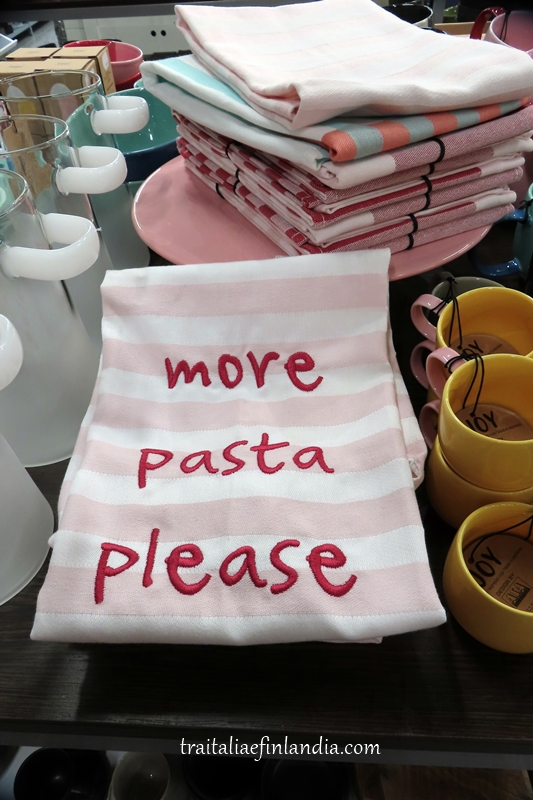
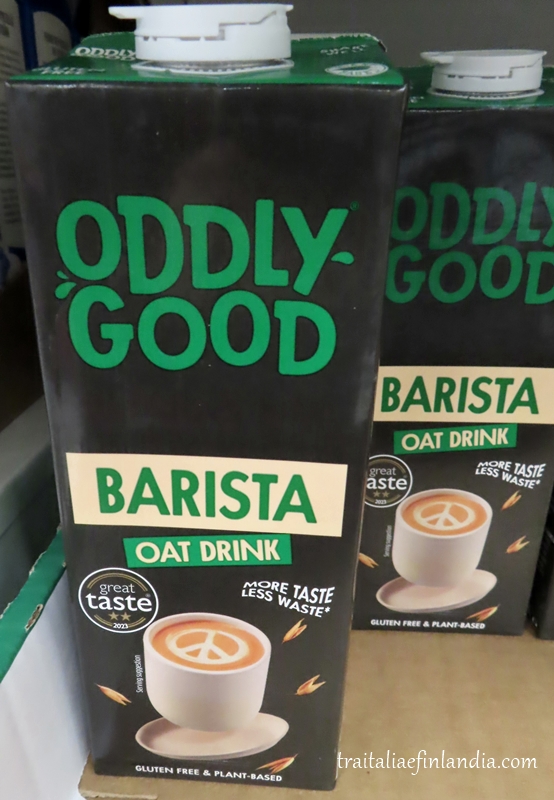
Qualche esempio di cio’ che trovo in Finlandia. Comunciamo da due must: caffe’ “Napoli” e “pasta”. Continuiamo con: “Barista”, una nuova arrivata. Sta a significare il caffe’ fatto professionalmente e quindi il piu’ buono. Qui il nome e’ stato dato ad una bevanda a base d’avena, con cui si puo’ schiarire il caffe’.
Una curiosa: “caramello”. Scritto sul cioccolato prodotto dalla svedese Marabou.

Anche “Amore” e’ inflazionata e ben nota…

Perfino “Bella ciao” e’ diventata immortale…

Altri esempi alimentari: “Pinsa sorriso”, prosciutto “crudo”.


Una particolarmente esotica: “Bari”; la citta’ della Puglia da’ il nome ad un pane in cassetta.

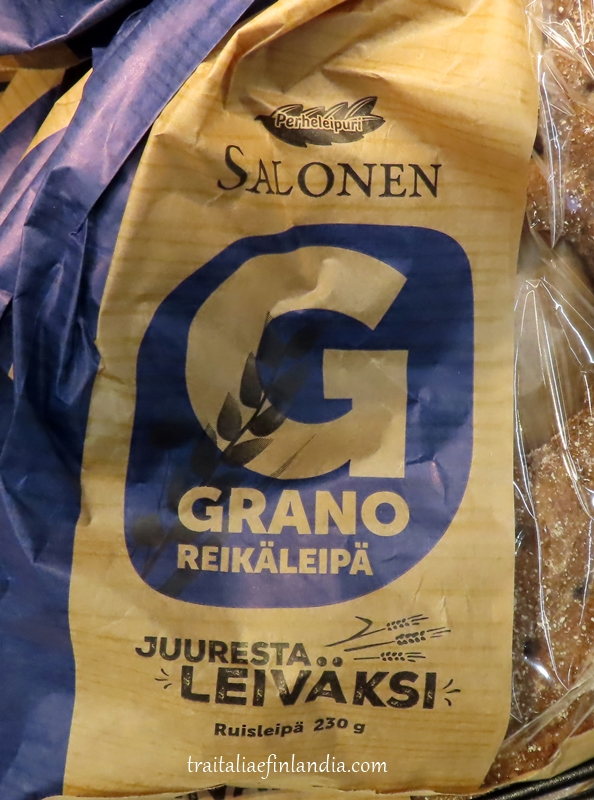
Questa e’ piu’ appropriata: “Grano” identifica un altro pane.
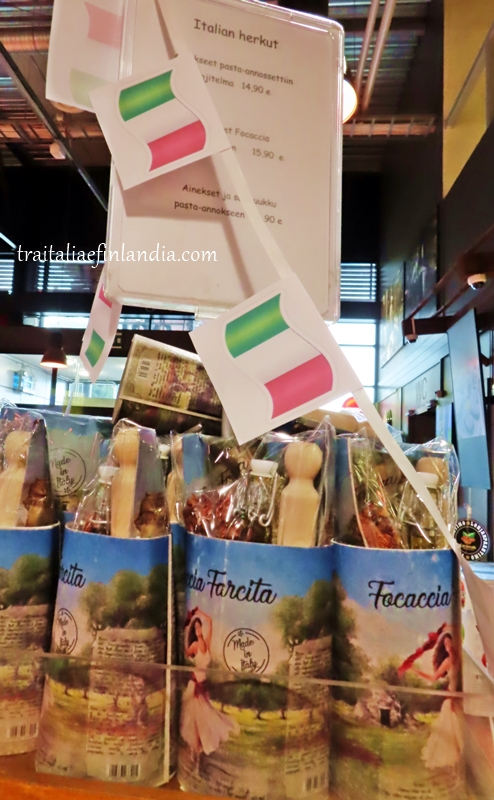
Per non parlare delle confezioni di prodotti pronte per preparare pietanze italiane. La seguente tratta di focaccia e il cartello dice: “Italian herkut – specialita’ italiane”.
L’ultima novita’ l’ho vista recentemente in uno spot televisivo, dove appare la parola: “scarpetta”. Addirittura!
La seguente l’ho scattata in un negozio di abbigliamento:

Concludiamo con una delle tante insegne di negozi e attivita’ che prendono spunto da espressioni italiane:

Se ne conclude che le parole italiane sono parecchio usate nel mondo, soprattutto per identificare prodotti genuini o fatti con cura. (A volte pero’ ho la sensazione che siamo un po’ sopravvalutati).
Ricordo infine che la terminologia in ambito musicale fa parte della miriade di vocaboli italiani esportati.
Non lamentiamoci quindi se le varie lingue si fondono, si intersecano, si influenzano a vicenda, cambiandosi, arricchendosi o limando le rispettive asperita’. Le lingue sono organismi vivi, che si evolvono, come le persone, tramite il contatto con gli altri. Se cosi’ non fosse, ci sarebbe solo chiusura mentale.
Italian Words.
Good morning readers! Today a post dedicated to all Italians who complain because Italian language is full of Anglicisms. Maybe even though they have travelled abroad, they have never noticed how many Italian words invade other languages every day. Here are some examples of what I find in Finland.
Let’s start with two musts: “Napoli” coffee and “pasta”. Let’s continue with: “Barista” (= barman), a new arrival. It means coffee made professionally and therefore the best. Here the name is given to an oat-based drink, which can be used to lighten coffee.
An unusual word: “Caramello”; written on the chocolate bar produced by Swedish company Marabou.
“Amore” of course is well known too…
Even “Bella ciao” has become an evergreen.
Parma ham is called “crudo” and “Pinsa sorriso” is a roman specialty.
A particularly exotic one: “Bari”; the city in Apulia gives its name to a sandwich bread.
“Grano” (= wheat) is more appropriate to describe a type of bread.
Not to mention the ready-made packages of products for preparing Italian dishes. The following deals with focaccia and the sign says: “Italian herkut – Italian specialties.”
I recently saw the most surprising one in a TV ad, where the word “scarpetta” appears.
The next word “punto” (= point/dot) was found in a clothes’ shop.
I will finish with one of the many shop and business signs that take inspiration from Italian expressions.
We can conclude saying that Italian words are widely used in the world, especially to identify genuine or carefully made products. (Sometimes, however, I feel that we are a bit overvalued.) Finally, I would like to remind you all that musical terminology is part of the myriad of Italian words exported.
So let’s not complain if the various languages merge, intersect, influence each other, changing, enriching or smoothing out their own rough edges. Languages are living organisms that evolve, like people, through contact with others. If this were not the case, there would only be no mind-openness at all.
****
 Tra Italia e Finlandia
I couldn’t agree more. Languages are living things that change over time to reflect their users. There’s not much use of other languages on packaging here since we have language laws to ensure that both French and English are represented. There are exceptions though and Italian is often used to represent – as you already noted – quality. A yummy post. 😊
"Mi piace"Piace a 1 persona
Pizza 🍕🍕
"Mi piace"Piace a 1 persona
Et quand il est question de gourmandises, l’ouverture d’esprit est plus large !!
"Mi piace"Piace a 1 persona
😄😄😄😋
"Mi piace""Mi piace"
Thank you Lynette for your contribution. Happy weekend!
"Mi piace"Piace a 1 persona
😄😄😄 d’accord! Merci.
"Mi piace"Piace a 1 persona
Ma è buono, il “pane Bari”? Da noi a Bari non esiste. 😉
"Mi piace"Piace a 1 persona
Hello,
All the products look great! Nuts Amore, sounds yummy.
Take care, enjoy your day! Have a great weekend.
"Mi piace"Piace a 1 persona
…Luisella, I like more pasta please!
"Mi piace"Piace a 1 persona
BEELA CIAO e BARISTA sono i più belli! 😀
"Mi piace"Piace a 1 persona
Non avrei mai pensato, davvero. Grazie per la condivisione!
"Mi piace"Piace a 1 persona
Che ridere, in Finlandia la pinsa va abbinata con un caffè americano?
"Mi piace"Piace a 1 persona
Certo! Ma anche con una birra o un bicchiere di latte freddo. 😄😄
"Mi piace"Piace a 1 persona
Grazie a te, Daniele. Mi fa piacere che ti abbia interessato. 😊
"Mi piace"Piace a 1 persona
Grazie. 😄😄
"Mi piace""Mi piace"
Bari è solo un nome che gli hanno dato. In realtà è una produzione locale di qui. Il nome italiano indica chiaramente che è fatto con farina di frumento e non avena.
"Mi piace"Piace a 1 persona
Good idea, Tom! 😋
"Mi piace""Mi piace"
Thank you Eileen. Have a great weekend too!
"Mi piace"Piace a 1 persona
Vedo che si fa un gran uso di parole italiane anche lì, è buffo pensare che qui da noi spesso si usano termini inglesi e magari all’estero si cercano espressioni italiane. Bello questo post, ci fai conoscere un po’ della tua Finlandia. Buon week end 😉😊👏👍🤗🤗
"Mi piace"Piace a 1 persona
Grazie per aver apprezzato, caro Max. Buon weekend anche a te!
"Mi piace"Piace a 1 persona
Cara Luisella la penso esattamente come te, 👍: non bisogna mai chiudere la possibilità al fatto che nuove lingue diventano parte del modo di parlare di oggi. Anch’io noto molta ristrettezza mentale quando un qualche anglicismo o altra parola che non sia di lingua italiana venga usata al posto di questa. Mi chiedo: ma che male c’è ad usare un anglicismo piuttosto che la propria lingua d’origine? Nulla da togliere alla lingua italiana che è molto bella e conosciuta in tutto il mondo ma allo stesso tempo VIVA LE PAROLE STRANIERE, 😀!
"Mi piace"Piace a 1 persona
Grazie mille Eleonora per il tuo gentile apprezzamento. Ci vuole apertura mentale per progredire.
Buon weekend!
"Mi piace"Piace a 1 persona
Esatto, 👍: senza una mente aperta si resta fermi o peggio, si regredisce.
Grazie a te, 😊.
Auguro anche a te un buon weekend cara Luisella, 🤗🤗🤗!
"Mi piace"Piace a 1 persona
a lot of words cross over.
"Mi piace"Piace a 2 people
Yes, definitely. It works like this. 😃
"Mi piace""Mi piace"
Tutto bello!
"Mi piace"Piace a 1 persona
Grazie mille. 😉
"Mi piace"Piace a 1 persona