**for English please scroll down**
Siracusa e’ una provincia italiana della regione Sicilia che conta oggi oltre 100.000 abitanti. Situata sulla costa sud-orientale della Sicilia, Siracusa vanta una lunga storia: fu citta’ della Magna Grecia, fu citta’ Romana, fu Bizantina, fu Moresca, fu Spagnola e fu settecentesca e barocca soprattutto. Fu anche citta’ natale di Archimede.
Tutte le popolazioni e le civilta’ che sono passate per Siracusa hanno lasciato la propria impronta in particolare nel Duomo, che da tempio greco e’ diventato moschea e in tempi piu’ recenti chiesa barocca.
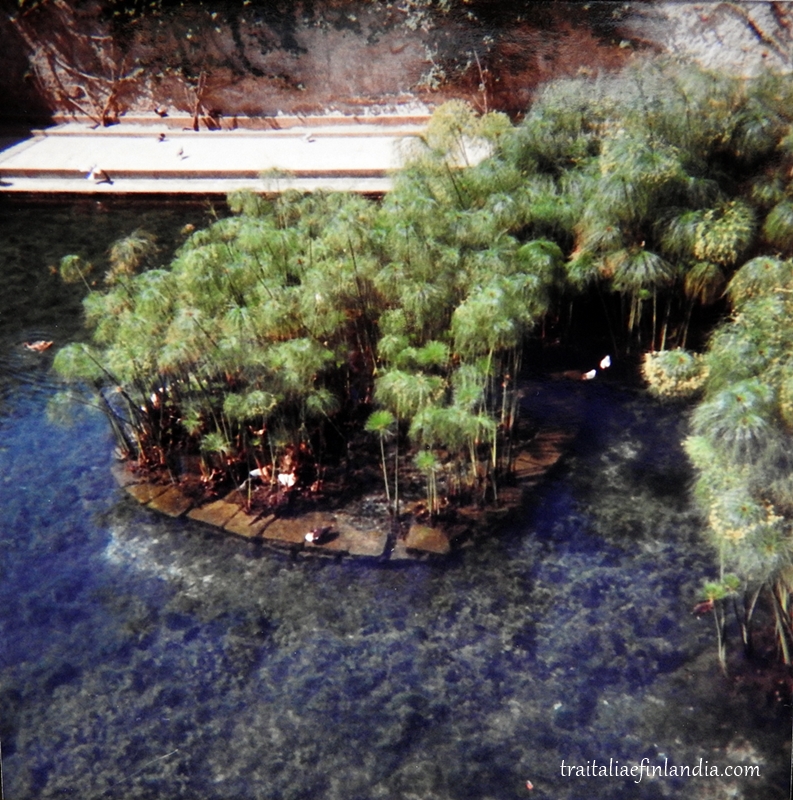
Vi propongo un collage di foto per sollecitare una vostra visita: in alto la zona di Ortigia, nella citta’ vecchia, con la fonte Aretusa: e’ l’unica zona in Europa dove vegeta spontanea la pianta del Papiro, proprio come nell’antico Egitto.
Qui sotto nel mosaico potete vedere:
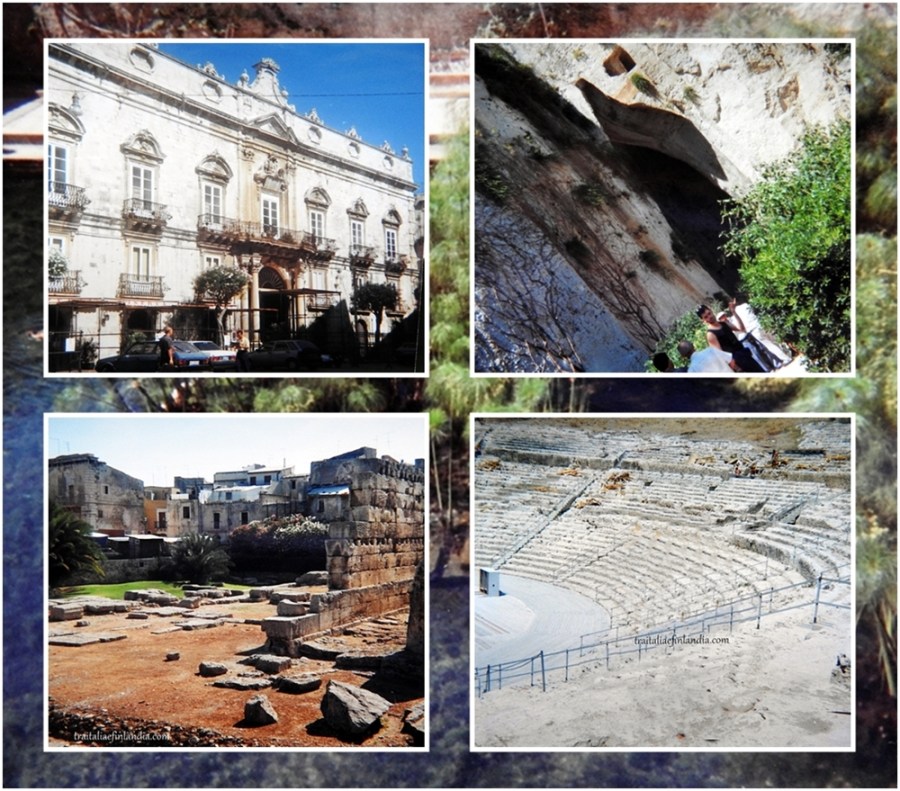
1- Palazzo Beneventano del Bosco. Una residenza nobiliare edificata nel 1400 ma trsformata nel 1600 in esempio fulgido di architettura barocca.
2- Il cosiddetto Orecchio di Dionisio, una cavita’ artificiale scavata nella roccia calcarea alta 23 metri, larga dai 5 agli 11 e profonda 25 che ha una peculiare capacita’ di amplificare i suoni, addirittura molte volte. Secondo la tradizione fu Dionisio, il tiranno di Siracusa in epoca greca, che la fece scavare per imprigionarvi i nemici. Venne chiamata cosi’ per la sua forma che ricorda un orecchio d’asino.
3- L’area archeologica con i resti del tempio di Apollo, che fu edificato nel VI secolo a.C. come un tempio dorico ma che subi’ le stesse trasformazioni del Duomo: divenne chiesa bizantina, moschea e infine fortezza spagnola. Oggi ne rimangono solo le vestigia.
4- Il Teatro greco, quasi interamente scavato nella roccia del colle Temenite e’ uno dei piu’ vasti in Europa. Edificato nel V secolo a.C., in epoca greca era usato per rappresentazioni ma anche per assemblee popolari. In epoche successive le pietre che compongono le scalinate furono depredate ed usate per altre costruzioni. Oggi fa parte del parco archeologico della citta’ ed e’ visitabile ad orari ben precisi, ma e’ anche attivo come teatro vero e proprio, per rappresentazioni e concerti.
Syracuse.
Syracuse is an Italian town in the Sicily region which today has over 100,000 inhabitants. Located on the south-eastern coast of Sicily, Syracuse boasts a long history: it was a city of Magna Graecia (the ancient Greek colonies in southern Italy), it was a Roman city, it was Byzantine, it was Moorish, it was Spanish and it was eighteenth-century and above all Baroque. It was also the birthplace of Archimedes.
All the populations and civilizations that have passed through Syracuse have left their mark, in particular in the Cathedral, which from a Greek temple became a mosque and in more recent times a Baroque church.
I will propose some shots to encourage your visit: above, the Ortigia area in the old town, where the Aretusa spring is: it is the only area in Europe where the Papyrus plant grows spontaneously, precisely as in ancient Egypt.
In the subsequent mosaic you can admire:
1- Palazzo Beneventano del Bosco. A noble residence built in 1400 but transformed in 1600 into a shining example of Baroque architecture.
2- The so-called Ear of Dionysius, an artificial cavity dug into the limestone rock 23 meters high, 5 to 11 meters wide and 25 meters deep which has a peculiar ability to amplify sounds, even many times. According to tradition, it was Dionysius, the tyrant of Syracuse in Greek times, who had it excavated to imprison his enemies. It was called this way because of its shape which resembles a donkey’s ear.
3- The archaeological area with the remains of the temple of Apollo, which was built in the 6th century BC. as a Doric temple but which underwent the same transformations as the Cathedral: it became a Byzantine church, a mosque and finally a Spanish fortress. Today only vestiges remain.
4- The Greek Theatre, almost entirely dug into the rock of the Temenite hill, is one of the largest in Europe. Built in the 5th century BC, in Greek times it was used for performances but also for popular assemblies. In later times the stones that make up the stairways were plundered and used for other constructions. Today it is part of the city’s archaeological park and can be visited at specific times, but it is also active as a real theater for performances and concerts.
****
 Tra Italia e Finlandia
Thanks for the interesting information about Syracuse. 😊
"Mi piace"Piace a 2 people
I love Syracusa! 🥰
"Mi piace"Piace a 1 persona
My pleasure to share it. Thank you.
"Mi piace"Piace a 1 persona
Conosco bene quella zona, molto bella anche per le spiagge e i piccoli paesini nei dintorni.
"Mi piace"Piace a 1 persona
mi piacerebbe tanto visitarla…
buona giornata cara Luisella… 🙋🏻😄
"Mi piace"Piace a 2 people
Buona giornata e buon weekend a te! Grazie. 🦋🌷
"Mi piace"Piace a 1 persona
As I said, my photos are older than yours…😉
"Mi piace"Piace a 1 persona
Bellissime immagini: mi hai fatto venire voglia di tornarci 💙
"Mi piace"Piace a 2 people
Grazie. Mi raccomando: non nella stagione estiva. 😉
"Mi piace"Piace a 1 persona
👍
Un abbraccio 🤗😘🤗
"Mi piace"Piace a 1 persona
I visited Syracuse a few years ago and admired it.
"Mi piace"Piace a 2 people
It looks like a beautiful place, I enjoyed seeing your photos.
Take care, have a great day and a happy weekend.
"Mi piace"Piace a 2 people
Thank you so much Eileen. Happy Friday to you!
"Mi piace"Piace a 1 persona
Thank you. Nice to hear that. 😊
"Mi piace""Mi piace"
🤗
"Mi piace"Piace a 1 persona
…and Syracuse is a city about an hour east of us!
"Mi piace"Piace a 2 people
The world is so small, after all…😉😆😆
"Mi piace""Mi piace"
It looks like Syracuse has so many impressive historical artifacts. I’ll keep it on my list. Maggie
"Mi piace"Piace a 2 people
visited Syracuse 3 years ago. we had great time on Sicily.
"Mi piace"Piace a 2 people
città splendida
"Mi piace"Piace a 2 people
Interesting to learn about this beautiful city.
"Mi piace"Piace a 2 people
Thank you so much.
"Mi piace"Piace a 1 persona
Davvero. Ricca di arte e storia…
"Mi piace"Piace a 1 persona
I am glad to hear that. Thank you Klara. 😊
"Mi piace""Mi piace"
Especially the Dome is an open history book.
"Mi piace"Piace a 1 persona
Even after having lived in Italy for a few years, there remains much to see & do. Sicily and Capri are two places that come to mind. Thank you for the quick trip and recommendations!
"Mi piace"Piace a 2 people
Nice to hear that. When we meet we will have a lot of things to tell…😊
Have a nice weekend and thanks for stopping by!
"Mi piace"Piace a 1 persona
Che meraviglia, grazie Luisella, c’è più Grecia in Sicilia che nella Grecia stessa! 😊👋🏻
"Mi piace"Piace a 2 people
Io invece l’ho visitata una volta sola molti anni fa, ma ne ho un bel ricordo.
Concordo sui pittoreschi paesini dei dintorni. 🙂
"Mi piace"Piace a 1 persona
In certi posti della Sicilia c’è veramente tanta Grecia. Grazie Valeria. 😊
"Mi piace"Piace a 1 persona
Interesting place, thanks for sharing!
"Mi piace"Piace a 1 persona
My pleasure. Thank you.
"Mi piace"Piace a 1 persona
Molto bello!
"Mi piace"Piace a 1 persona
Grazie mille.
"Mi piace"Piace a 1 persona