**for English please scroll down**
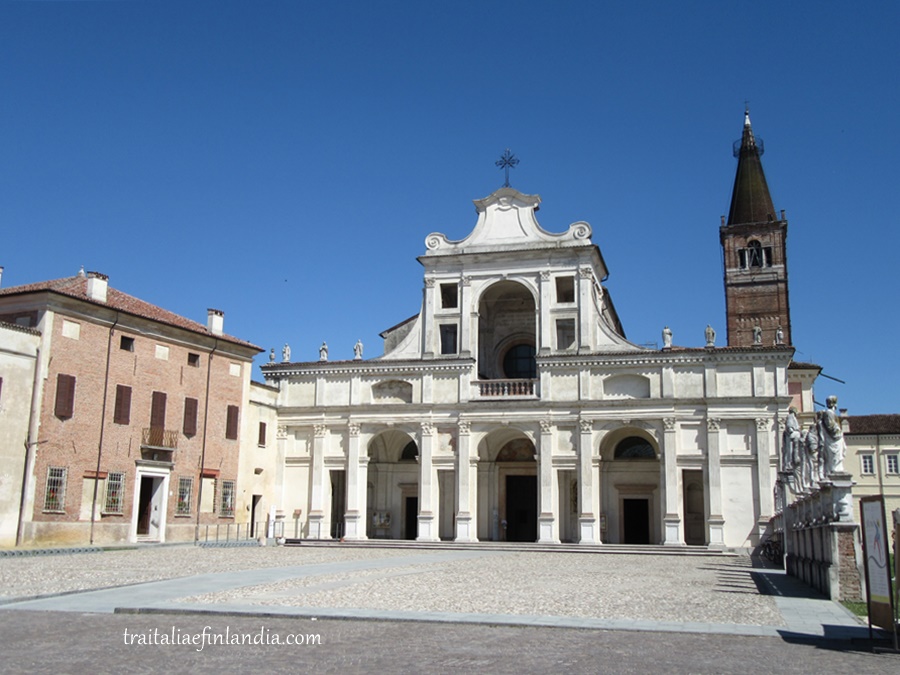
Nel centro del paese di San Benedetto Po, in provincia di Mantova, si erge maestoso il complesso dell’Abbazia di Polirone. Si tratta di un complesso di edifici, i cui primi furono edificati attorno all’anno mille. A quel tempo il complesso era un monastero, collegato con i piu’ conosciuti di Montecassino e Cluny.
Trattandosi di un monastero, sorsero ben presto attorno all’edificio principale tutti gli ambienti secondari che comunque vi facevano parte e servivano alla sussistenza dei monaci: i chiostri, il refettorio, il cortile dei pellegrini, la casa dell’abate, la biblioteca, l’infermeria, la sala del capitolo, la cantina, l’orto officinale.
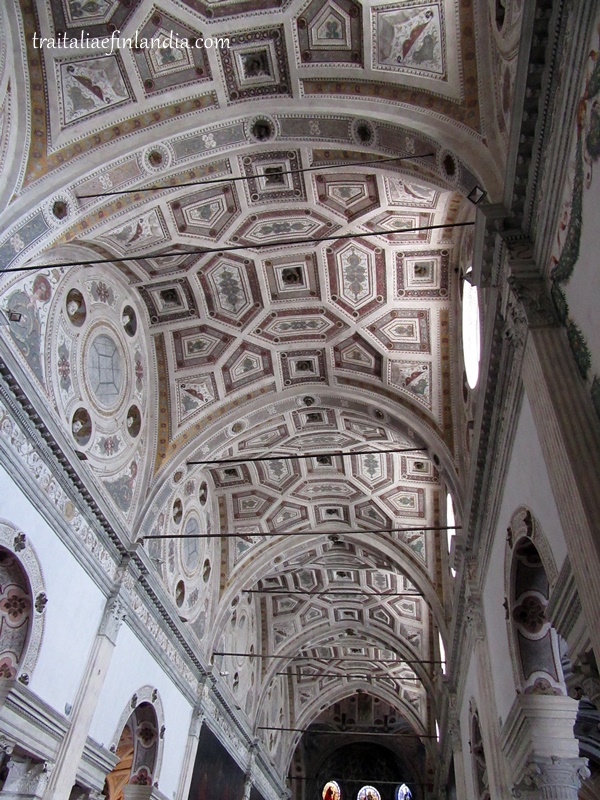

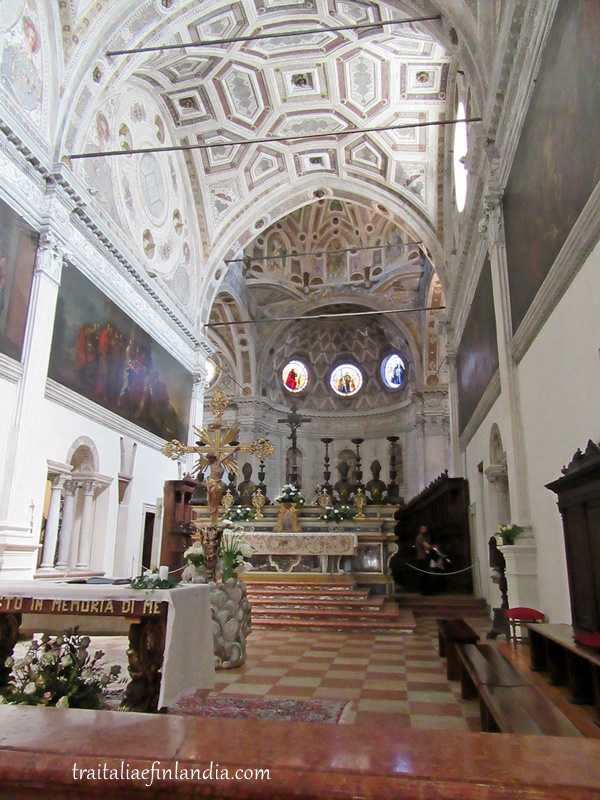

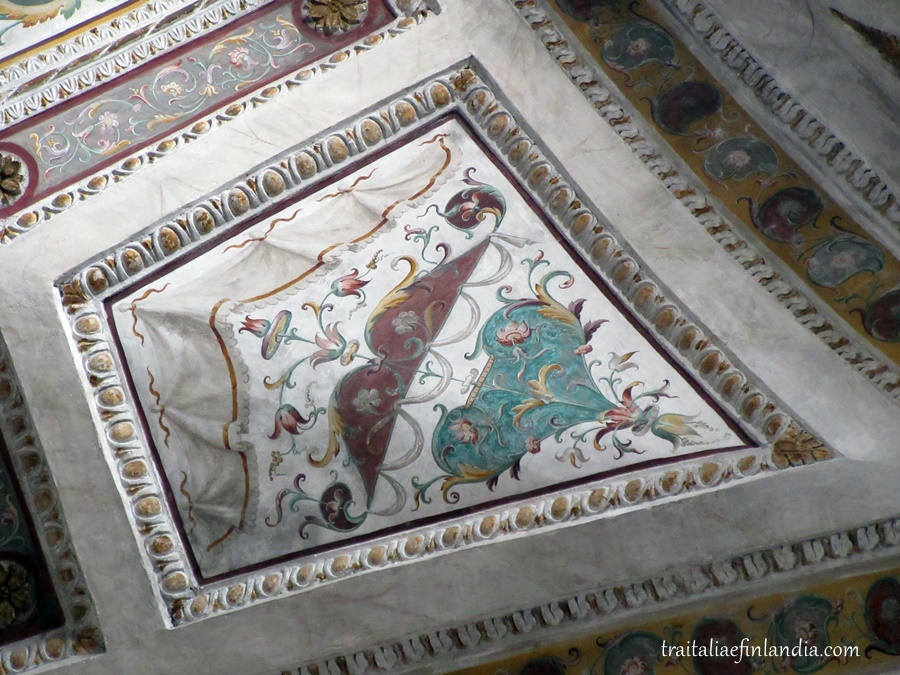
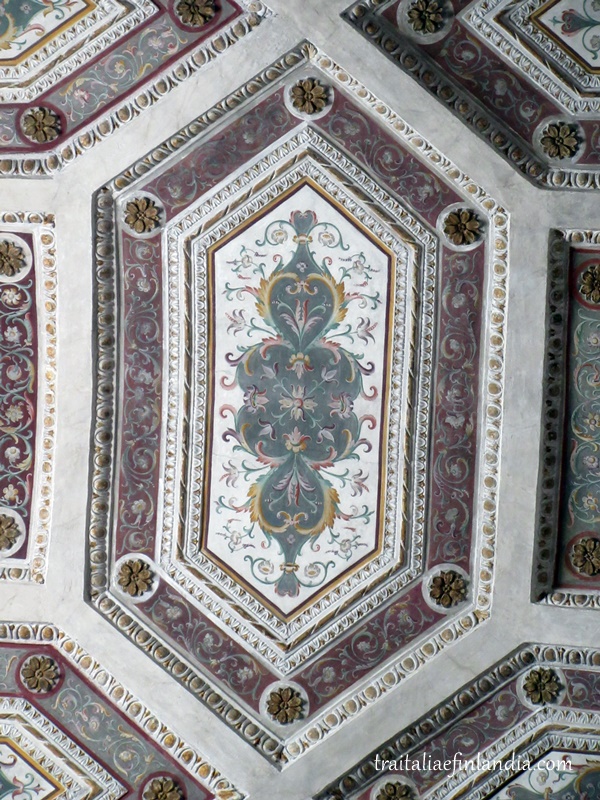

Nel mio post di oggi ammiriamo alcuni dettagli della chiesa dedicata a San Benedetto e San Simeone, che spicca al centro del complesso. Nel 1500 subi’ una lunga opera di restauro (come anche l’intero complesso) ad opera di Giulio Romano, che la volle decorata come un palazzo nobiliare, con fiori e ghirlande di frutta sostenute da putti.
Come tante altre strutture, edifici, castelli e chiese, durante la travagliata storia dell’Italia, anche questa abbazia ebbe fasi alterne: nel 1510 vi fu persino ospite Martin Lutero, durante un suo viaggio in Italia, ma in epoca napoleonica fu soppressa; inoltre subi’ inondazioni e terremoti.

Oggi molti degli edifici secondari del complesso attorno all’abbazia opitano musei.
Polirone (part 1).
In the very town centre of San Benedetto Po, in the province of Mantua, the monumental Polirone Abbey stands majestically out. It is a cluster of buildings, the oldest of which were built around the year 1000. At that time the complex was a monastery, connected with the better known ones of Montecassino and Cluny.
Since it was a monastery, all the secondary rooms which were part of it and served for the subsistence of the monks soon arose around the main building: the cloisters, the refectory, the pilgrims’ courtyard, the abbot’s house, the library, the the infirmary, the chapter room, the cellar, the medicinal garden.
In my post today we can admire some details of the church dedicated to San Benedetto and San Simeone, which stands out among other monumental buildings. Between the 15th century and the 16th century it underwent a long restoration work (as did the entire complex) by architect Giulio Romano, who wanted it decorated like a noble palace, with flowers and fruit garlands supported by cherubs.
As well as many other structures, buildings, castles and churches during the troubled history of Italy, this abbey also went through alternating phases: in 1510 even Martin Luther was a guest there during one of his trips to Italy, but in the Napoleonic era it was suppressed; it also suffered floods and earthquakes.
Nowadays the premises surrounding the church are partly museums.
****


Arte, storia, cultura qui si abbracciano. Serena giornata! 🌻
"Mi piace"Piace a 1 persona
Such a beautiful building.
"Mi piace"Piace a 1 persona
L’architecture et l’intérieur sont de toute beauté, j’aime beaucoup ces peintures, le portail et la statut de St-Georges. Bonne journée
"Mi piace"Piace a 1 persona
che magnificenza! Buona giornata 🌹
"Mi piace"Piace a 1 persona
Buona giornata, cara Shera e grazie. 🌈
"Mi piace"Piace a 1 persona
Je suis content que tu aies apprécié mon message. 😊 Bonne journée!
"Mi piace""Mi piace"
Thank you Lynette. 😊
"Mi piace"Piace a 1 persona
Grazie, altrettanto! 🌈
"Mi piace"Piace a 1 persona
🦋
"Mi piace"Piace a 1 persona
L’intérieur est magnifique !
"Mi piace"Piace a 2 people
Merci. 😊 Bonne journée, Sylvie!
"Mi piace"Piace a 1 persona
Je suis en accord
"Mi piace"Piace a 2 people
Che meraviglia, Luisella! 👏🏻
"Mi piace"Piace a 1 persona
This is so amazing!
"Mi piace"Piace a 1 persona
A wonderful church!
"Mi piace"Piace a 1 persona
Molto belle queste foto, le chiese e le abbazie sono luoghi veramente molto belli
"Mi piace"Piace a 1 persona
Veramente grandiosa questa abbazia e piena di opere d’arte. Bellissima!!!!
"Mi piace"Piace a 1 persona
.
STUNNING ARCHITECTURE AND BEAUTIFULLY PHOTOGRAPHED
"Mi piace"Piace a 1 persona
Ci eravamo state anni fa…un bel ricordo…situato in mezzo alla Pianura Padana …grazie di avermelo rammentato con le tue belle foto!
"Mi piace"Piace a 1 persona
Grazie a te Luisa per l’apprezzamento. Mi fa piacere averti portato un gradito ricordo.
"Mi piace"Piace a 1 persona
Thank you for your kind comment, Willy.
"Mi piace""Mi piace"
Si, un vero gioiello. Grazie Vitty. 😊
"Mi piace"Piace a 1 persona
Agreed. Thanks. 😊👍
"Mi piace"Piace a 1 persona
Thanks. 😊
"Mi piace"Piace a 1 persona
Grazie mille cara Valeria. 😊
"Mi piace"Piace a 1 persona
Merci. 😊
"Mi piace"Piace a 1 persona
Un ensemble magnifique !
"Mi piace"Piace a 1 persona
Merci. 😊
"Mi piace""Mi piace"
belle immagini, davvero una bellissima Chiesa 😊😉👍👍👍👏👏👏
"Mi piace"Piace a 1 persona
Davvero. Grazie Max. Buona serata!
"Mi piace"Piace a 1 persona
non ci sono mai stata…
hai fatto delle bellissime foto…
buona notte cara Luisella… 😘💫🌜
"Mi piace"Piace a 1 persona
Grazie mille. Buona giornata cara Cinzia. 🌈
"Mi piace"Piace a 1 persona
A beautiful church and accompanying buildings in a small town (or is it a big village?). There are many such hidden gems in Italy
"Mi piace"Piace a 1 persona
Thank you Starszy. It is a very small town.
"Mi piace""Mi piace"
Was für eine Pracht.
Sie hatten viel Geld damals und viel Lust es für prächtige Bauten auszugeben.
Schöööön
"Mi piace"Piace a 1 persona
Vielen Dank, Brigitte. Gute Nacht! 👋😊
"Mi piace"Piace a 1 persona
It’s mind boggling to think these beautiful buildings go back well over 1000 years. So much incredible history!
"Mi piace"Piace a 1 persona
Such a captivating glimpse into history and architecture! The Polirone Abbey is a testament to Italy’s rich cultural heritage. Thanks for sharing these stunning photos and insights, Luisella!
"Mi piace"Piace a 1 persona
Such a captivating glimpse into history and architecture! The Polirone Abbey is a testament to Italy’s rich cultural heritage. Thanks for sharing these stunning photos and insights, Luisella!
"Mi piace"Piace a 1 persona
One more place to put down for the long awaited Italian trip. I only know of Mantua from Shakespeare!
"Mi piace"Piace a 1 persona
My pleasure to share it.
Another suggestion for Mantua: Giuseppe Verdi’s opera “Rigoletto “.
"Mi piace"Piace a 1 persona
My pleasure, Veronica. Thanks.
"Mi piace""Mi piace"
Thanks for stopping by, kind Peter. Happy weekend!
"Mi piace""Mi piace"
Si, proprio vero. Grazie.
"Mi piace"Piace a 1 persona