
Continuiamo la nostra visita di Trömperin Kiestikievari, cioe’ quella che fu una locanda e oggi e’ una caffetteria e museo.
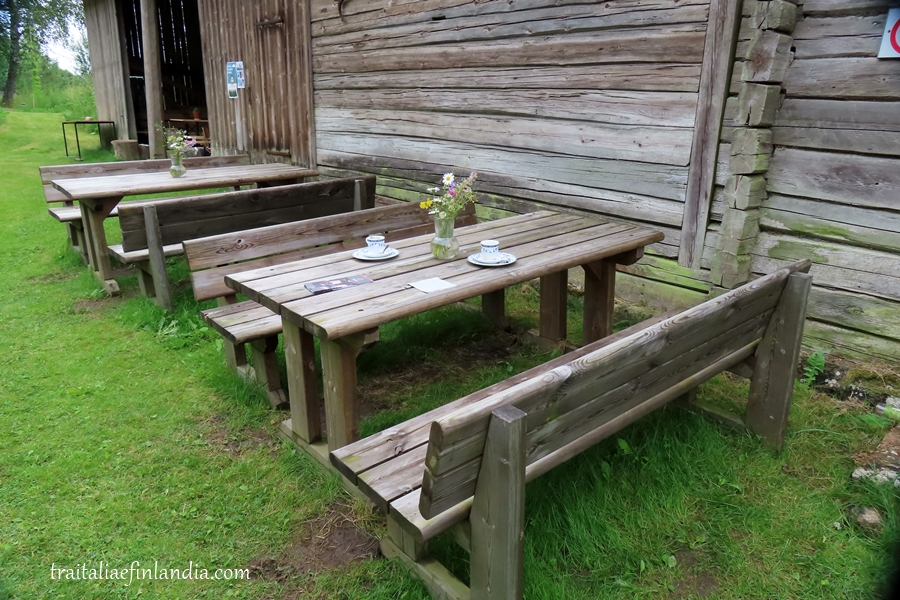
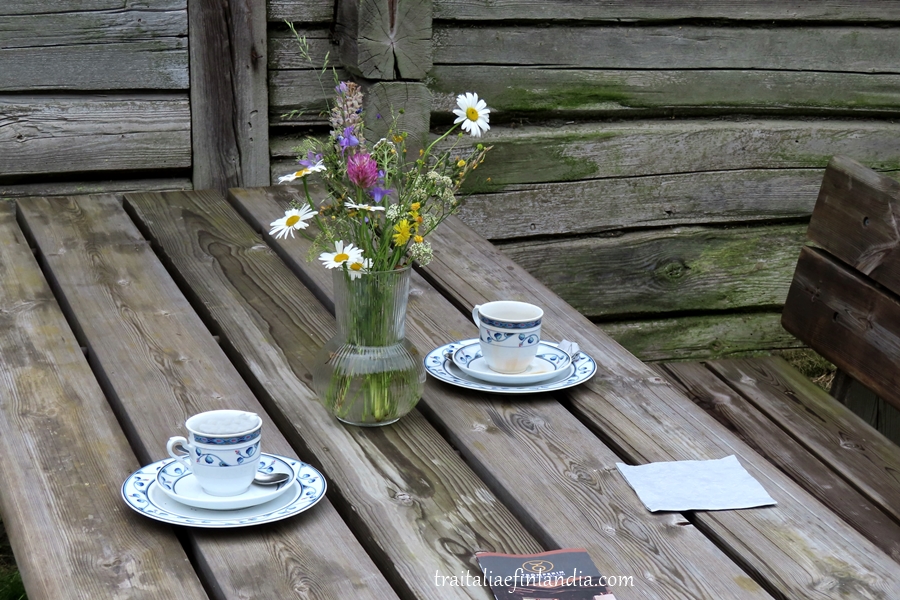
Osserviamo la zona allora dedicata al riposo dei cavalli. Si tratta di una stalla collocata di fronte, che oggi e’ parte della caffetteria. E’ un ambiente meno formale, adattissimo alle famiglie con bambini.


Alcune curiosita’: qui sotto il tetto degli edifici, fatto di tegole lignee, come si usava nei secoli passati.

Appesa al muro, la lunga lancia un tempo usata per manovrare i tronchi di legno quando si facevano trasportare dalla corrente dei fiumi.

Il pane di segale, col buco per essere appeso e conservato molto a lungo.

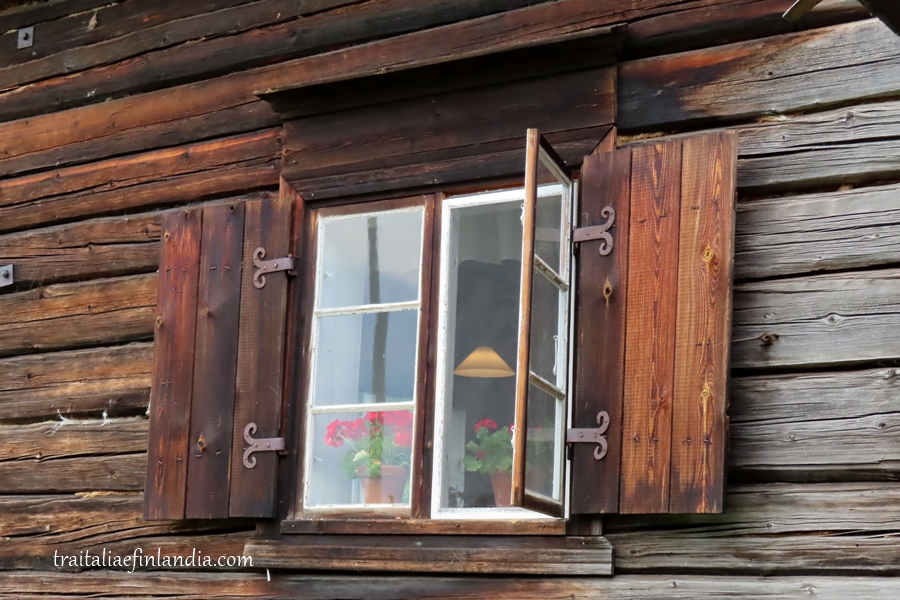
Trömperi #2.
We will continue our visit to Trömperin Kiestikievari, which used to be an inn and is nowadays a café and museum.
Today we are looking at the area dedicated to the horses’ rest, in the past. It is a stable located opposite, which today is part of the café. It is a less formal environment, suitable for families with children.
Some less known aspects: please admire the roof of the buildings, made of wooden tiles, as it was done in the past centuries.
Hanging on the wall is the long spear once used to maneuver wooden logs when they were carried by rivers’ stream.
Rye bread, with a hole so it can be hung and preserved for a very long time.
****
 Tra Italia e Finlandia
Always interesting to see these places. Thanks for taking us along. Wooden roof tiles used to be used here, too.
"Mi piace"Piace a 1 persona
What a gorgeous and quaint building – looks so cosy!
"Mi piace"Piace a 1 persona
C’est très sympa ces chalets en pleine nature où l’on peut passer de bons moments. Bonne journée
"Mi piace"Piace a 1 persona
Thanks for introducing this charming place!
"Mi piace"Piace a 1 persona
Bellissimo. Pur avendo frequentato molto la montagna, non avevo mai visto le tegole in legno. 🙂
"Mi piace"Piace a 1 persona
…Luisella, thank for taking me along to enjoy the rustic charm of Trömperi.
"Mi piace"Piace a 1 persona
Hello,
What a wonderful place, I love the rustic buildings. Take care, have a wonderful day!
"Mi piace"Piace a 1 persona
My pleasure, Susu, thank you.
"Mi piace"Piace a 1 persona
Merci beaucoup Georges et bonne journée egalemént.
"Mi piace""Mi piace"
Thank you very much.
"Mi piace"Piace a 1 persona
Thank you Lynette. My pleasure to share it.
"Mi piace"Piace a 1 persona
My pleasure, Tom. Thanks.
"Mi piace""Mi piace"
Thank you very much Eileen. Wishing you a happy day too!
"Mi piace"Piace a 1 persona
Great idea with the bread… OTOH plastic chairs and tables do not fit the character of the place.
"Mi piace"Piace a 1 persona
Absolutely. Thank you Starszy.
"Mi piace""Mi piace"
Adoro quelle baite rustiche.
"Mi piace"Piace a 1 persona
Anch’io. Grazie Egidio.
"Mi piace"Piace a 1 persona
Rye Bread! I wondered what they were. I thought of doughnuts, but thought probably not! 🙂 And yes, the wooden shingles are from another era!
"Mi piace"Piace a 1 persona
It was nice to have a second look at the place. That bread must be very hard. I guess it’s warmed up first before eating?
"Mi piace"Piace a 2 people
Rye has been cultivated for centuries here because it survives well in this climate. Wheat is a more recent acquisition. Barley and oats are the second most common.
"Mi piace"Piace a 1 persona
Thanks!
"Mi piace"Piace a 1 persona
Actually this hard bread was dipped into soups or other liquids. The tradition of making bread once per week (or less) has been popular all over Europe in places where the community had one common oven only, for instance, or in particularly poor families. They used rye flour because it lasts longer.
"Mi piace""Mi piace"
Interesting to know, thank you.
"Mi piace"Piace a 1 persona
Qui e’ un classico delle costruzioni piu’ vecchie.
"Mi piace""Mi piace"