**for English please scroll down**
In inverno, camminare sulla neve fresca e’ un piacere ed un divertimento. La neve fresca e’ quella appena caduta, oppure e’ quella che si e’ mantenuta invariata nel tempo sempre al di sotto degli zero gradi, senza mai sciogliersi. Quella e’ neve leggera e piena di aria, che ammortizza i passi e sotto le suole fa quel gradevole rumore …scronc.
Quando pero’ il termometro e’ ballerino e fa sciogliere la neve in superficie di giorno e poi la gela di notte, non e’ piu’ piacevole, ma diventa ghiaccio insidioso. Allora per camminarci sopra in sicurezza non esiste che una soluzione: i chiodi. Proprio come per i pneumatici.
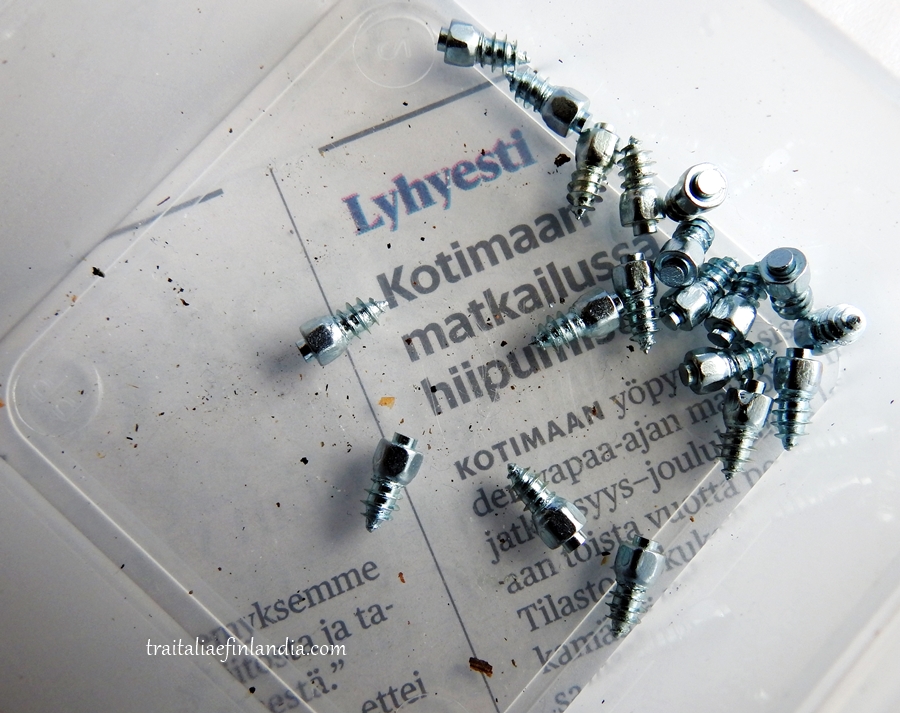
Ci sono ovviamente in commercio molti modelli di scarponcini chiodati, ma e’ anche possibile acquistare i chiodi e applicarli da se’ alle proprie scarpe. E’ proprio quello che abbiamo fatto lo scorso inverno: abbiamo comprato una scatolina di chiodi come quelli che vedete nella foto e li abbiamo avvitati dentro la suola dei nostri stivali.
Si tratta di chiodi atti allo scopo: si avvitano con uno strumento dato in dotazione, fuoriescono di pochi millimetri ma se ne possono mettere quanti si vuole e la presa sul ghiaccio e’ assicurata. Non si ha piu’ paura di scivolare.
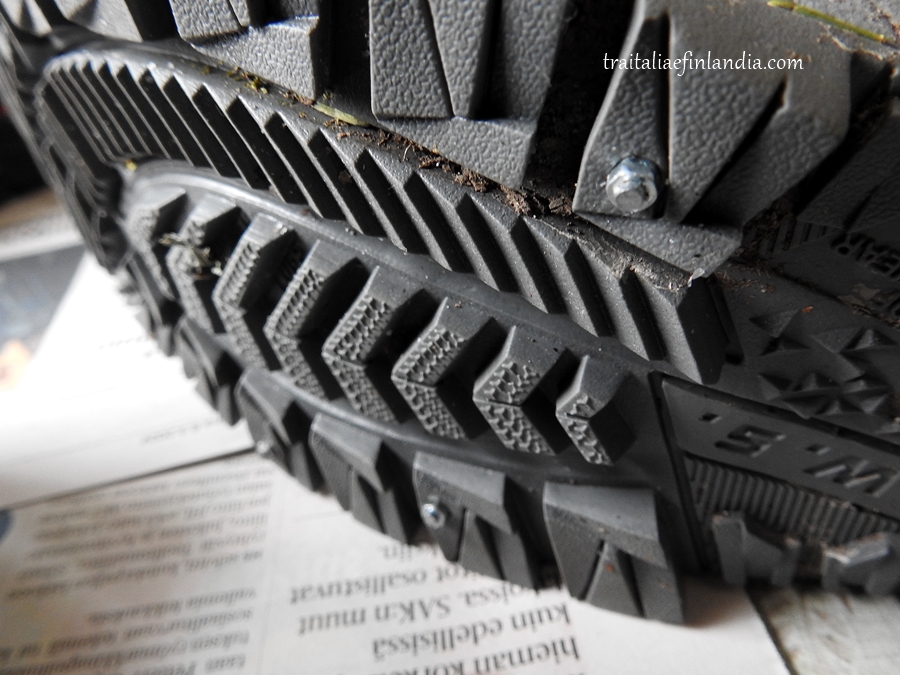
Forse sembra impossibile, ma una serie di chiodi posizionati in questo modo assicura una presa sicura del piede sul ghiaccio. Semplice e geniale. Senza contare che sono meno pesanti dei ramponi.
Naturalmente si puo’ camminare non solo nei boschi, ma anche su superfici non ghiacciate: non si ha nessun fastidio. Chi vive in centro citta’ e pensa di trovare ghiaccio puo’ metterli anche se entra/esce dai locali pubblici. Meglio avere i chiodi che rischiare di scivolare…
Vi avevo gia’ parlato dei chiodi in questo post: https://traitaliaefinlandia.com/2017/01/13/le-biciclette-di-turku/
A Great Idea.
In winter, walking on fresh snow is a pleasure and fun. Fresh snow is when snow has just fallen, or when it has remained unchanged over time, always below zero degrees, without ever melting. That snow is light and full of air, it cushions your steps and makes that pleasant noise under your soles… scrunches.
When the thermometer fluctuates and makes the snow melt on the surface during the day and then freezes it at night, instead, it is no longer pleasant, but it becomes treacherous ice. So to walk on it safely there is only one solution: studs. Just like tyres.
You can find many models of studded boots on the market, but it is also possible to purchase the studs and apply them yourself to your shoes. That’s exactly what we did last winter: we bought a small box of studs like the ones you see in the photo and screwed them into the soles of our boots.
These are nails suitable for the purpose: they are screwed in with a tool supplied, they protrude a few millimeters but you can insert as many as you want and the grip on the ice is guaranteed. You are no longer afraid of slipping.
It may seem impossible, but a series of spikes positioned in this way ensures a secure foothold on the ice. Simple and brilliant and less heavy of the lightest crampons.
Of course you can also walk not only in the woods, but also on non-icy surfaces: there is no discomfort. Anyone who lives in the city center and thinks they will find ice can wear them on even if they enter/exit public places. Better to have studded shoes than risk slipping…
I already told about studs in my post: https://traitaliaefinlandia.com/2017/01/13/le-biciclette-di-turku/
****


Génial, je ne connaissais pas 😊
"Mi piace"Piace a 1 persona
Tres bien pensé, mais il faut des semelles très épaisses sinon….😉
Amitiés
"Mi piace"Piace a 1 persona
They work well and yes, very secure. 😊
"Mi piace"Piace a 1 persona
Une bonne idée pour éviter les chutes. Bonne journée
"Mi piace"Piace a 1 persona
I’ve had Icebugs boots already for 20 years. The winters in Helsinki seem to become more and more icy.
Those studs are important!!
"Mi piace"Piace a 1 persona
Che brillante idea 🙏🩵🙏
"Mi piace"Piace a 1 persona
…traction is an important part of life.
"Mi piace"Piace a 1 persona
Great idea, looks like walking would be safer with the studs.
Take care, have a wonderful day!
"Mi piace"Piace a 1 persona
Thank you. We use them especially in the forest and dirt roads around our home. Happy Wednesday!
"Mi piace"Piace a 1 persona
Sure! 😄😄
"Mi piace""Mi piace"
Proprio utile. Grazie Luisa.
"Mi piace"Piace a 1 persona
This year in particular, winter is alternatively icy and snowy in Somero.
"Mi piace"Piace a 1 persona
Oui, bonne soirée, Georges!
"Mi piace""Mi piace"
They are useful indeed. 😊
"Mi piace"Piace a 1 persona
Oui, ce sont des bottes ou des chaussures de randonnée. Bonne soirée, Patrice!
"Mi piace""Mi piace"
Merci Sylvie. 😊
"Mi piace"Piace a 1 persona
Per voi che vivete parecchi mesi all’anno con temperature sottozero è una buona soluzione 👍👍👍👍
"Mi piace"Piace a 1 persona
A great idea! My partner calls me “Bambi on Ice” as I’m always slipping when walking over snow.
"Mi piace"Piace a 1 persona
Unfortunately it is easy to slip…snow can be soft on the surface, but icy underneath.
"Mi piace"Piace a 1 persona
Per la verità, l’inverno nella Finlandia meridionale va da novembre a fine marzo, ma non è sempre innevato e non è sempre sottozero. 😊
"Mi piace"Piace a 1 persona
Don’t the studs damage the sole permanently? And what about the noise when walking on pavements, tiled floors &c?
"Mi piace"Piace a 1 persona
🌷🌷🌷
"Mi piace"Piace a 1 persona
Yes, they are noisy, but you have to consider when and where to wear them, to consider how serious the risk of slipping is. As regards the damage, the answer is no: you will screw the studs in thick soles, for instance trekking shoes soles, and they will stay and work.
"Mi piace""Mi piace"
Thanks for your interest. 😊
"Mi piace""Mi piace"
di solito le soluzioni semplici sono quelle più efficaci, come in questo caso.
"Mi piace"Piace a 1 persona
Oh si, davvero. 😊
"Mi piace"Piace a 1 persona
Che idea
"Mi piace"Piace a 1 persona
Si…utilissima. 😊
"Mi piace""Mi piace"
I wear steel toe boots, which have a pretty decent tread.
"Mi piace"Piace a 1 persona
Good boots are important.
"Mi piace""Mi piace"