**for English please scroll down**
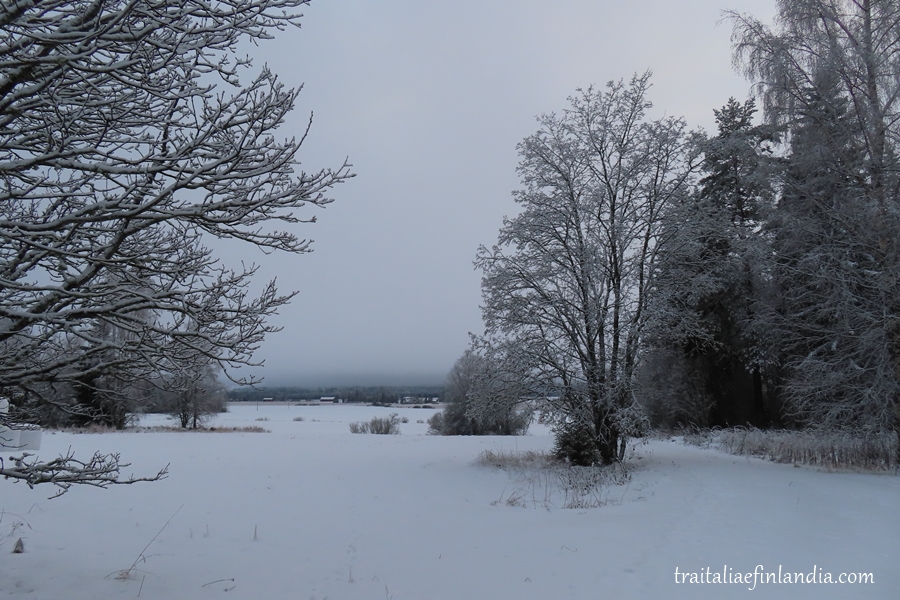


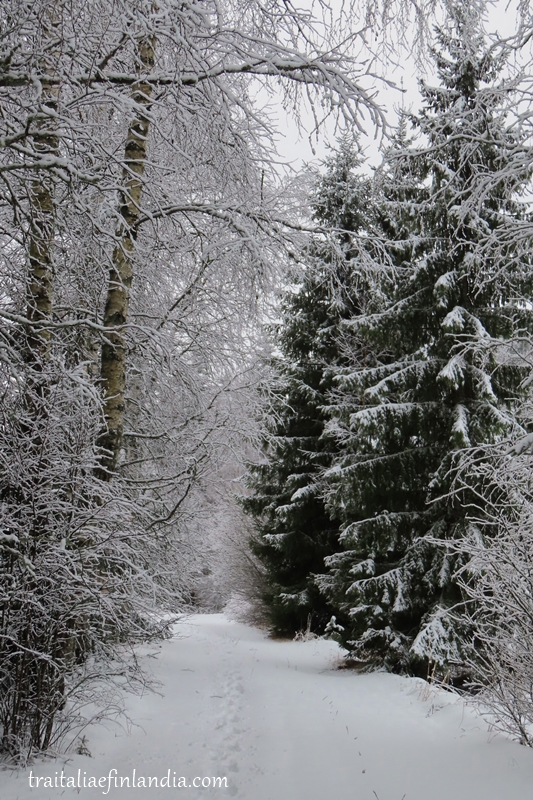
Non ci sono nella lingua finlandese moltissime espressioni per indicare la neve, o meglio: i diversi stati della neve. Non certo come nelle lingue dell’estremo nord del mondo come Sami e Inuit. Ma qualcuna c’e’, senz’altro.
Oggi parliamo di due espressioni simili: Nuoska e Loska.
Indicano due stati della neve molto simili, due consistenze molto vicine fra loro: Nuoska indica la neve umida, quella a zero gradi, quella che non essendo gelata quasi si stacca dagli alberi…proprio come le foto di questo post.

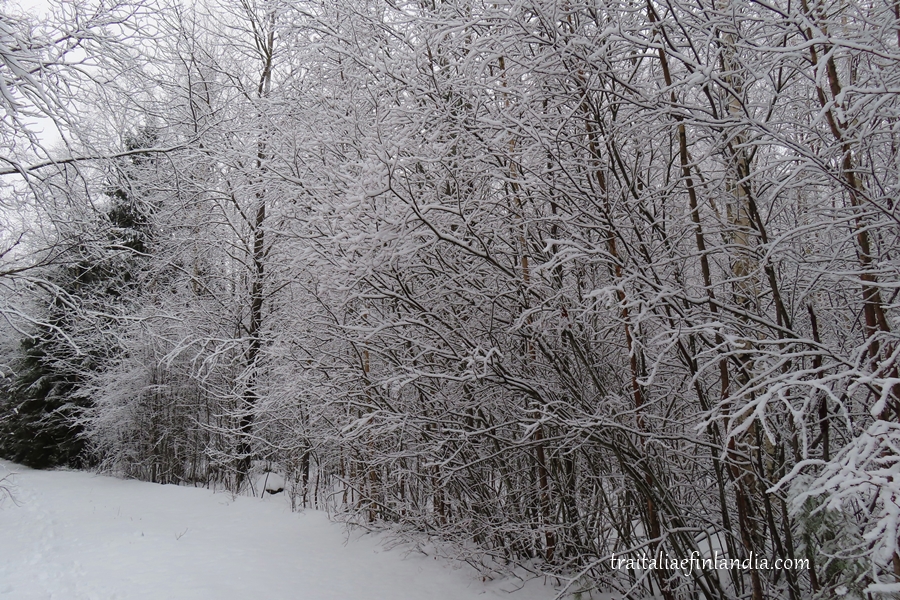

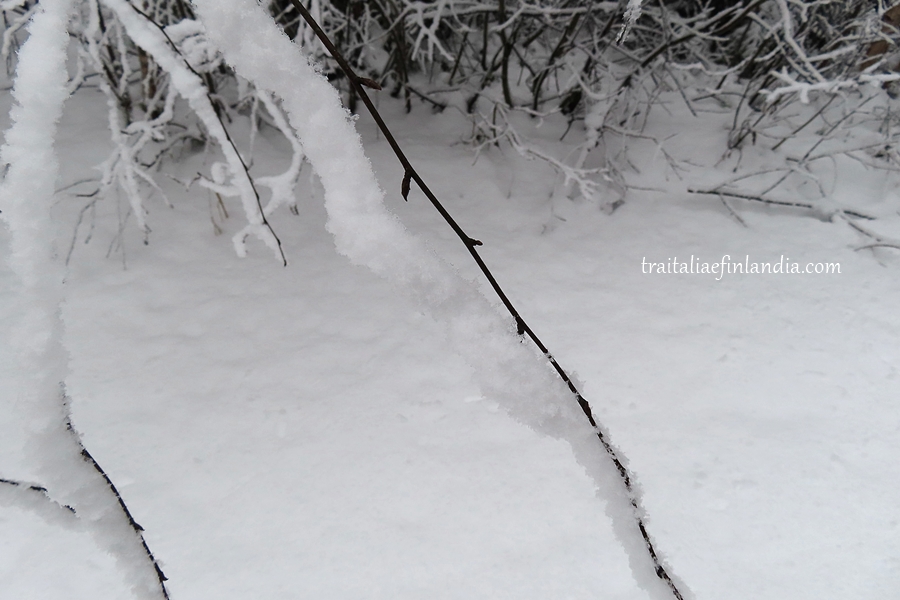
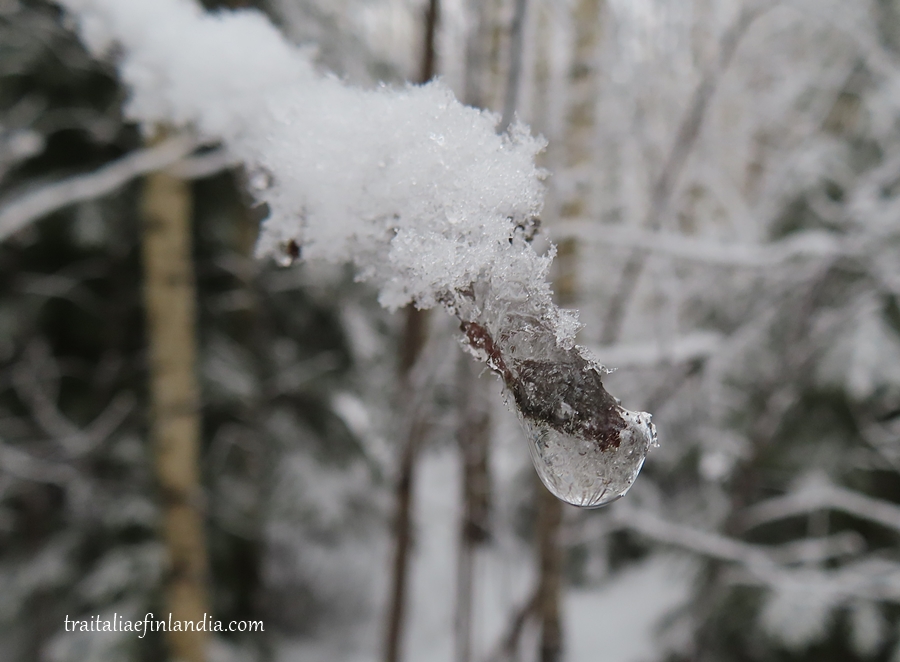
Come si vede chiaramente, la neve e’ umida, greve, non gelata e sta per staccarsi dai rami; addirittura c’e’ qualche gocciolina d’acqua. Questa e’ Nuoska.
Questo tipo di neve e’ quello che conosciamo bene a Verona, dove le temperature non sono mai cosi’ basse da far gelare la neve e dove il giorno dopo e’ gia’ praticamente sciolta.
Loska indica invece lo step successivo: la neve totalmente bagnata che cade dai rami, dai tetti, che gocciola e che s’impastriccia con la polvere e la terra. La neve mezza sciolta, che forma pozzanghere d’acqua e’ Loska.
Nuoska.
In the Finnish language there aren’t many expressions to indicate snow, or rather: the different aspects of snow. Certainly not as many as in the languages of the far north of the world such as Sami and Inuit.
But there are some, for sure.
Today we’re talking about two similar expressions: Nuoska and Loska. They indicate two very similar aspects of snow, two consistencies very close to each other: Nuoska indicates wet snow, the zero degrees C snow, the one that, not being frozen, almost drops off the trees…just like the photos in this post.
As you can clearly see, the snow is wet, heavy, not frozen and is about to fall off the branches; there are even a few drops of water. This is Nuoska.
This type of snow is the one we know well in Verona, where temperatures are never so low as to freeze the snow and where the next day it is already practically melted.
Loska instead indicates the next step: the completely wet snow that falls from branches, from roofs, that drips and that gets stuck with dust and earth. The half-melted snow, that forms puddles of water is Loska.
****


Nuoska is the type we just had. Very heavy and wet; it won’t last long at all. Beautifully dramatic photos. Gorgeous.
"Mi piace"Piace a 1 persona
Che belle foto
buona giornata
"Mi piace"Piace a 1 persona
Grazie e buona giornata anche a te. 🌈
"Mi piace""Mi piace"
C’est joliment illustré.
"Mi piace"Piace a 1 persona
Merci beaucoup. 😊❄️❄️❄️
"Mi piace"Piace a 1 persona
Thank you very much, Lynette. 😊❄️❄️❄️
"Mi piace"Piace a 1 persona
Tes photos sont magnifiques !
Bonne journée
"Mi piace"Piace a 1 persona
Merci beaucoup et bonne journée!
"Mi piace""Mi piace"
Je rejoins Georges.
Amitiés.
"Mi piace"Piace a 1 persona
It looks pretty. But I have been shoveling it for most of February. That takes a little off its allure! But I do like your photos.
"Mi piace"Piace a 1 persona
Beautiful winter landscapes. I just love the snow covered trees.
Take care, have a great day and a wonderful week ahead.
"Mi piace"Piace a 1 persona
💖❄️💖❄️💖
"Mi piace"Piace a 1 persona
…I call these images beautiful and we have the same outside our window today.
"Mi piace"Piace a 1 persona
Beautiful. Our snow is very dry, which isn’t very picturesque, but is better to ski. Maggie
"Mi piace"Piace a 1 persona
Le foto come sempre sono magnetiche per me e trovo fantastico che ci siano parole differenti per i diversi stadi della neve.
"Mi piace"Piace a 1 persona
Wet snow on branches looks beautiful in your photos
"Mi piace"Piace a 1 persona
Foto 📷 bellissime, ciao Luisella, buona serata 😊
"Mi piace"Piace a 1 persona
Che belle immagini di neve, il vero inverno è dalle tue parti…😊😊😊😊😉👍👍👍👍👍🤗🤗
"Mi piace"Piace a 1 persona
Grazie mille e buona serata a te, cara Valeria.
"Mi piace"Piace a 1 persona
Thank you Starszy. 😊❄️❄️❄️
"Mi piace""Mi piace"
Le lingue sono tesori affascinanti. Grazie Claudia.
"Mi piace"Piace a 1 persona
Sure! I prefer dry snow under my skis too!
"Mi piace"Piace a 1 persona
White is nice…
"Mi piace""Mi piace"
Grazie Luisa! 😊
"Mi piace"Piace a 1 persona
Thank you very much. Wishing you a great week too!
"Mi piace"Piace a 1 persona
Thank you very much. Shoveling is free gym…😉
"Mi piace""Mi piace"
Merci beaucoup. Bonne soirée! 😊❄️❄️❄️
"Mi piace""Mi piace"
Grazie Max. Quest’anno è un inverno mite e con poca neve…
"Mi piace"Piace a 1 persona
Beautiful snow pictures. We’ve just had snow and right now we have below zero temperatures for the next few days. It’s SO COLD. Ready for Spring.
"Mi piace"Piace a 1 persona
These are beautiful winter photos! We had 70 cms of snow recently; 2 storms just days apart ❄️
"Mi piace"Piace a 1 persona
That’s quite a lot! We are having so little, this winter. I hope you are safe and warm.
"Mi piace""Mi piace"
Buon martedì, cara Luisella ❄️💕❄️
"Mi piace"Piace a 1 persona
Fascinating facts! ❄️
"Mi piace"Piace a 1 persona
Thank you very much. Glad you liked my post. 😊
"Mi piace"Piace a 1 persona
Well, we are ready for spring too…😉 Stay warm and well!
"Mi piace"Piace a 1 persona
I’m hibernating (well almost) until the snow is cleared.
"Mi piace"Piace a 1 persona
😄😄
"Mi piace"Piace a 1 persona
❤
"Mi piace"Piace a 1 persona
Ciao Cara foto bellissime. 😘
"Mi piace"Piace a 1 persona
Grazie mille cara Antonella. 💝
"Mi piace""Mi piace"